Sorting Facility Automation Guide
Report

Report TL;DR
The necessity of automation has transitioned from a 'choice' to a 'must' due to structural factors such as labor shortages, safety accidents, and tightening policy pressures. However, concerns regarding space constraints, cost burdens, equipment suitability, and potential operational downtime make many hesitate to implement it. This guide addresses these concerns and covers the following topics to help customers make rational decisions.
Reasons why automation is necessary
Self-diagnostic checklist for adoption suitability
Customized solution examples by sorting facility type
Preparatory tasks for successful implementation
Step-by-step implementation process

Ultimately, this guide aims to go beyond the question of "Does our sorting facility need automation?" to present actionable answers on "How do we introduce automation suitable for our sorting facility?" Through this, readers can objectively confirm the need for automation and design an automation approach tailored to their site. Used well, the "Sorting Facility Automation Guide" will serve as a strategic roadmap for enhancing the sustainability and competitiveness of your sorting facility, rather than just being a technical document.
Table of Contents
Why we must consider automation now
The most dangerous choice: Maintaining the status quo
Need for regulatory response: Urgent preparations for automation
Is it possible to introduce robots to our sorting facility?
3-minute self-diagnostic checklist
Examples of equipment configuration by type
Preparations before implementation
3 key preparatory tasks for successful automation implementation
Customer meeting review: Gaining trust beyond technology
On-site case: Easy robot management
Implementation Process
Implementation process at a glance: From design to sustainable operation
Chapter 01. Why we must consider automation now
Topic 1. 'Maintaining the status quo' is the most dangerous choice
Risk 1: Labor issue - 'The disappearing workplace'
Risk 2: Safety issue - 'A danger you can't ignore'
Risk 3: Policy issue - 'Unavoidable pressure'
'Doing things the way they have always been done'. In a rapidly changing environment, choosing to maintain the status quo is the most dangerous choice, leaving you defenseless against three imminent, massive risks.
Risk 1: Labor issue - 'The disappearing workplace'
The labor issue is beyond a problem to solve; it is a 'constant crisis' that threatens the very survival of the business.
Chronic labor shortages and aging workforce
Sorting is a classic 3D (dirty, dangerous, difficult) job that few people want, and almost no new workers are coming in. The aging of the existing workforce is accelerating, making declines in productivity and increases in safety accident risks an obvious reality.
Surging labor cost burdens
Labor shortages inevitably lead to rising labor costs. In addition, the minimum wage and various allowances that rise every year put direct pressure on corporate profitability. 'The current cost structure reliant on human labor' has a 'structural limitation that hinders growth', where labor cost burdens increase as throughput increases.
Reality proven by statistics
The aging of workers in domestic recycling sorting facilities is already at a serious level, which is also proven by statistics. The workforce composition of many local government and private sorting facilities shows that those in their 50s and 60s or older account for more than half, clearly demonstrating that this cannot be a sustainable operational model. The steady rise in labor costs is easy to foresee from the annual minimum wage increases.
Risk 2: Safety issue - 'A danger you can't ignore'
Broken glass shards, sharp metals, and even syringe needles. Workers are exposed to danger at every moment. Now, safety is not just a slogan, but a core aspect of management and a legal responsibility.
Strong warnings sent by laws and systems
The Serious Accidents Punishment Act (Act No. 18721), which took effect in 2022, completely changed the safety paradigm of workplaces. Business owners or management executives who cause serious industrial accidents by violating their obligations to secure safety and health can face imprisonment of at least one year or a fine of up to 1 billion won. This makes clear that it is a matter of 'legal risks of management executives' rather than just a matter of 'costs'.
ESG management and corporate reputation
Safety accidents cause fatal damage to a company's reputation beyond legal responsibilities. In particular, when trading with large corporations or participating in public bidding, safety-related indicators act as a core evaluation factor of ESG management. Poor working environments and frequent safety accidents lower a company's social credibility, which can be a decisive disqualification factor in contract and order competition.
Risk 3: Policy issue - 'Unavoidable pressure'
The government imposes 'obligations' and demands 'results' through powerful laws and concrete figures. The current manual sorting methods can never ride the wave of incoming policies.
Tightening recycling obligations and quality standards
The government is comprehensively strengthening recycling standards, including 'mandatory modernization of public sorting facilities', 'raising Extended Producer Responsibility (EPR) mandatory rates', and 'mandatory use of recycled materials'. In particular, the policy of differentially paying sorting subsidies by up to 8 times depending on the quality of sorted products means that producing low-quality sorted products practically forces giving up profits.
Unattainable goals
With the current manual-centric sorting method, it is physically impossible to stably produce the high recycling rates and high-quality sorted products with a purity of 90% or higher demanded by the government. If policy standards are not met, subsidies may be cut, or in the worst-case scenario, sales channels may be blocked because you cannot find paper mills or recycling companies to accept the recyclables.
Pressure proven by numbers
The Ministry of Environment's "Guidelines for the Installation and Operation of Public Recycling Infrastructure" and related notices specify the installation of optical sorters for sorting facilities with a daily processing capacity of 10 tons or more, and the policy for 'differential sorting quality improvement subsidies' clearly distinguishes and pays support unit prices according to the ratio of foreign substances in sorted products. This shows that policy compliance is directly linked to the 'revenue' of the facility.
Topic 2. Need for regulatory response: Urgent preparations for automation
'Dangerous reality' shown by statistics
Summary of policy trends - Why and how is pressure intensifying?
'Urgency of automation' proven by specific regulations
Going beyond the stage of 'properly separating and discarding' to 'turning what is discarded back into high-quality resources'
The government is demanding a complete transition to a circular economy through strong policy pressure. For manual-centric sorting facilities to respond to rising regulations and standards, preparation for automation is essential.
'Dangerous reality' shown by statistics
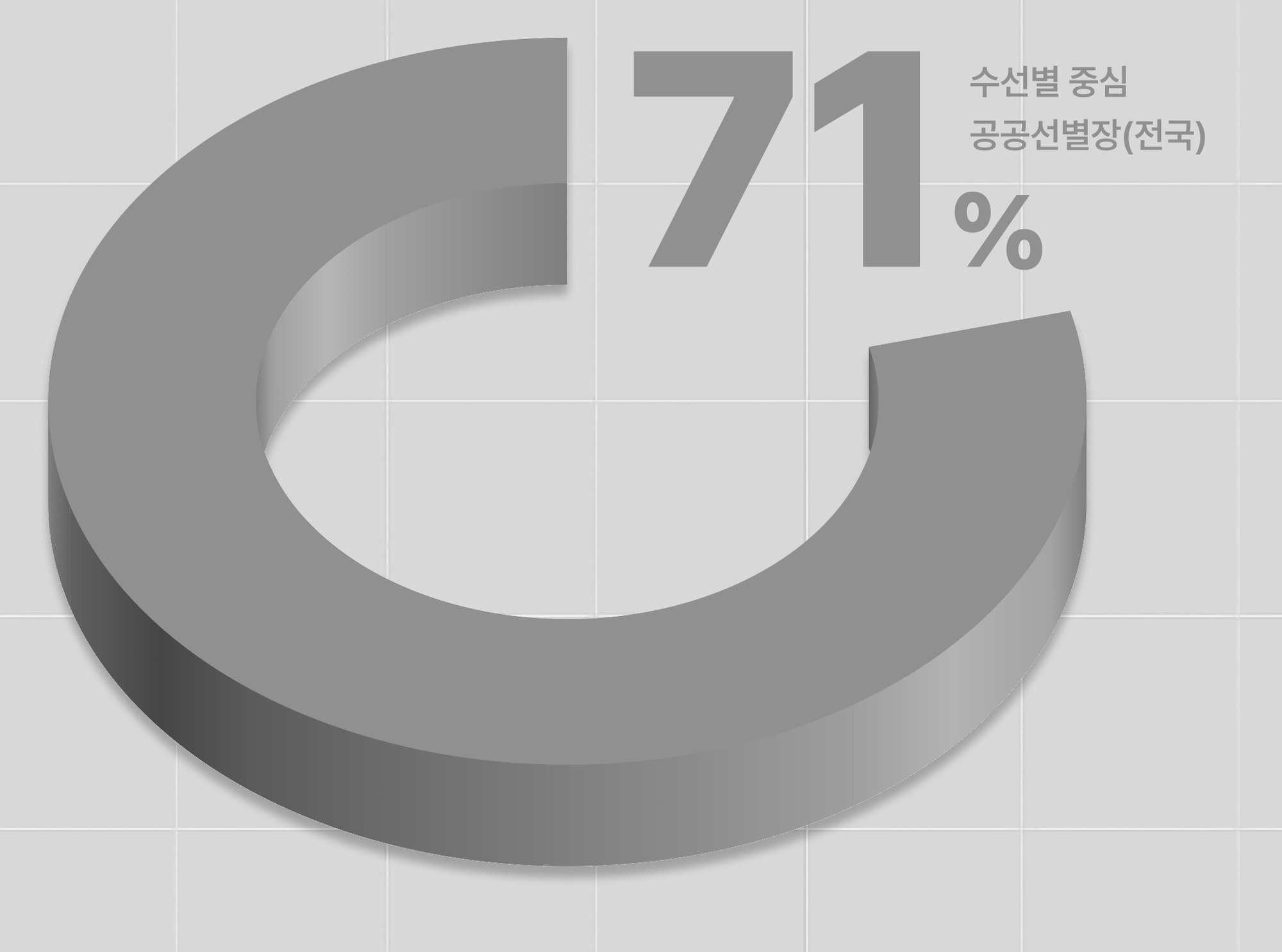
Manual sorting-centric public sorting facilities (nationwide) 71%
The current state of reliance on manual labor
As of 2022, about 71% of the 187 public sorting facilities nationwide are still operated focusing on manual labor. Most of these facilities were built in the early 2000s, meaning the facilities are aging, and automation equipment like optical sorters is non-existent. The situation is not much different for private sorting facilities.
Physical limitations
In the case of manual sorting, even skilled personnel have obvious limitations in daily throughput and sorting accuracy. It is impossible to visually distinguish the various materials (PET, PE, PP, PS, etc.) of waste passing rapidly on a conveyor belt and simultaneously remove foreign substances attached to the waste. And this acts as a fundamental obstacle hindering the 'production of high-purity recycled raw materials' demanded by the government.
Summary of policy trends - Why and how is pressure intensifying?
Government policy is composed of the tight logic of [Goal Setting → Market Creation → Quality Demand → Pressure Execution]. In the final stage of this flow, manual sorting facilities will become the most vulnerable link unable to comply with regulations.
01 Goal Setting — Transition to a Circular Economy
The government specified the goal of managing waste as a major resource rather than simply treating it through the 'Act on the Promotion of Transition to a Circular Economy Society'. It set national goals such as reducing plastic waste generation and raising recycling rates.
02 Market Creation — Mandatory Use of Recycled Materials
To achieve the goals, PET production companies and others are mandated to use 30% recycled materials by 2030. This forcibly created a 'stable demand market' for high-quality recycled materials.
03 Quality Demand — Strengthening Sorting Quality Standards
Now, companies demanding recycled materials will only purchase high-quality raw materials to keep their legal obligations. In line with this, the government has started to directly manage and pressure the quality of sorted products. It is difficult to meet these government quality-related standards with manual labor.
04 Pressure Execution — Differential Subsidies and Facility Modernization Obligations
Ultimately, facilities that fail to meet quality standards will face financial disadvantages such as subsidy cuts, and the introduction of automation equipment like optical sorters is legally mandated to ensure standards are met.
'Urgency of automation' proven by specific regulations
Regulation | Core Content / In Case of Non-compliance |
|---|---|
Guidelines for the Installation and Operation of Public Recycling Infrastructure (Ministerial Directive No. 1581) |
|
Differential Sorting Quality Improvement Subsidies |
|
Extended Producer Responsibility (EPR) System |
|
Serious Accidents Punishment Act |
|
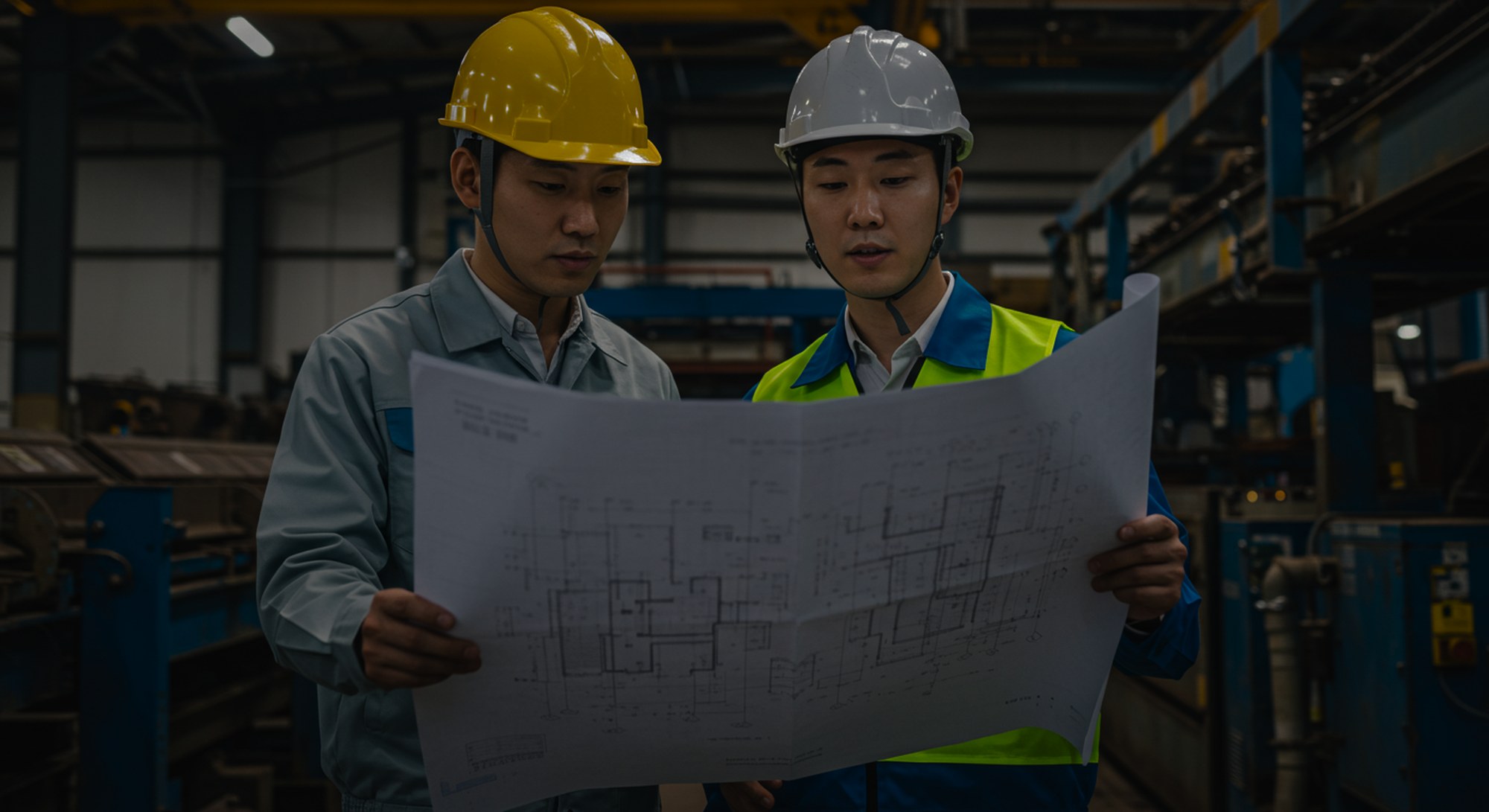
Manual-centric sorting facilities, change for survival. The intensifying regulations point to the 'introduction of automation equipment' as the answer. Failing to prepare now is no different from leaving the future of your business to luck in front of the raging waves of policy.
Chapter 02. Is it possible to introduce robots to our sorting facility?
Topic 1. 3-minute self-diagnostic checklist
Space: Is there a place for the robot to stand?
Waste: What should the robot sort?
Process: Where will the robot be placed?
"Our sorting facility is too old and narrow, so robots are impossible."
The 'suitability of AI robots for individual sites' is the very first concern encountered for automation. However, AI robot technology is much more flexible than thought and can be applied to various on-site conditions. By looking at the required items, you can draw a clear picture for your workplace.
Space: Is there a place for the robot to stand?
Conveyor belt width
Determines the working range of the robot arm. The wider the belt width, the longer reach the robot needs, which affects installation space and cost.
⬜️ Less than 1m
⬜️ 1m ~ 1.4m
⬜️ Over 1.4m
Clearance above the belt
Vertical space for the movement of the robot body and arm. If the ceiling is low or there are interfering structures, installation can be difficult, but most can be resolved with partial structural changes.
⬜️ Less than 2.5m
⬜️ 2.5m or more can be secured
⬜️ I don't know
Surrounding clearance
Space is required for workers to safely approach for robot installation and maintenance.
⬜️ Approachable and workable for maintenance personnel
⬜️ Unapproachable - No spare space
Waste: What should the robot sort?
Clear sorting target
Whether you want to recover specific recyclables like PET bottles and cans, or remove foreign substances from remnants, the target must be clear to apply the optimal AI model and settings.
⬜️ Yes (e.g., PET bottles, cans)
⬜️ No (Want overall improvement)
Waste input volume/thickness
The AI camera captures images from top to bottom. If waste is stacked too thickly, items lying underneath cannot be recognized. If the input volume is high, equipment that spreads out the waste (such as a vibrating feeder) may be required before robot feeding.
⬜️ Spread in 1 layer on the belt
⬜️ Stacked in 2-3 layers
⬜️ Piled up like a mountain
Size/weight of target objects
There is a limit to the size and weight that the robot's end effector (hand) can pick up. The physical characteristics of the sorting target are key factors in determining the type of robot and end effector.
⬜️ Mainly single-hand grip size
⬜️ Very small (bottle caps) or large (large home appliances)
Process: Where will the robot be placed?
Desired role of the robot
The role and efficiency vary depending on which process the robot is placed in. It is important to find the most effective position, considering the existing equipment and workforce operational status. (e.g., input as a QC role on the remnant treatment line → common)
⬜️ Pre-treatment: Sorting main items before manual sorting
⬜️ Post-treatment (QC): Recovering recyclables from remnants after manual sorting
⬜️ I don't know
Conveyor belt speed
The conveyor belt speed is directly linked to the robot's picks per minute (PPM). If the speed is too fast, it may be difficult for the robot to follow targets, requiring robot specification upgrades or belt speed adjustments.
⬜️ Low speed (10m/min)
⬜️ Medium speed (30m/min)
⬜️ High speed (50m/min or more)
Upstream and downstream equipment
If there is equipment that pre-screens the types or sizes of waste before the robot starts sorting, the robot can focus on more precise sorting, maximizing efficiency.
⬜️ Yes (e.g., ballistic separator, drum screen)
⬜️ No (Only manual lines exist)
Checklist Result Analysis
Analysis 01 — Most items are 'adoptable'
Your sorting facility is in very good condition for adopting AI robots. It is time to discuss specific models, optimal installation locations, and expected effects through consultation with experts right now.
Analysis 02 — Some items are 'difficult or I don't know'
There is absolutely no need to worry. This is a natural situation that most sites experience. Rather, the checklist has clearly shown 'points that need resolution'. And consulting with experts is a process of finding customized solutions for those 'points that need resolution'.
"What if space is insufficient?" Suggesting partial line changes or compact robot models installable in smaller spaces
"What if waste is stacked too much?" Jointly suggesting pre-treatment equipment capable of maximizing efficiency with a small additional investment

As a result, the checklist does not judge 'adoptable/unadoptable'.
The checklist is a process of objectively grasping our sorting facility and finding a starting point for achieving successful automation. Request a free on-site survey and consultation from experts. We will find the optimal customized solution to resolve your concerns.
Topic 2. Examples of equipment configuration by type
Type 1: Traditional manual-centric sorting facility
Type 2: Sorting facility with optical sorters
Type 3: New or entirely modernization-planned sorting facility
Misconception: Equipment too large and expensive?
"Finding the perfect solution for our site"
What equipment configuration would be optimal for our sorting facility identified through the self-diagnostic checklist? We propose three types of equipment configurations tailored to the current automation level and main concerns of sorting facilities.
Type 1: Traditional manual-centric sorting facility — High-risk group for labor shortages and safety accidents
Current status and concerns
High reliance on manual labor + extreme labor shortage + labor cost burden
Constantly existing safety accident risks
Worsened profitability due to low sorting efficiency and difficulties responding to policies
Recommended Solution
Deploy AI robot for QC (quality control) role in the 'final residue treatment process'
Configuration Example
Maintain the existing manual sorting line as is
Install the AI robot on the remnant conveyor belt where final waste is discarded after sorting is completed
Expected Effects
Low-cost, high-efficiency investment: Automation with minimal investment at the final stage where inefficiency is severe, without changing the entire line
Creating 'hidden profits': Robots recover recyclables such as cans and PET in remnants 24 hours a day, which were bound to be missed by manual labor
Cost reduction: Decrease in final waste volume → Reduction in incineration/landfill treatment costs
Securing safety: The most dangerous and difficult final sorting work → Replaced by robots → Blocking worker safety accident risks
Type 2: Sorting facility with optical sorters — Need for advanced sorting quality and efficiency
Current status and concerns
Possessing primary automation equipment such as optical sorters → Presence of items or foreign substances missed by optical sorters → Decline in final sorting quality
Recommended Solution
Place 'AI Robot QC Partner' downstream of the optical sorter
Configuration Example
Optical sorter primary-sorts PET, PE, etc., in large quantities → AI robot precisely sorts remaining remnants
Expected Effects
Maximizing existing investment value: Maximizing the investment value of existing equipment in the form of bulk sorting (optical sorter) + precision sorting (AI robot) → AI robot focuses on recovering niche items (colored PET, other plastics, etc.) missed by the optical sorter or removing foreign substances
High-quality sorted product production: Improving final sorted product purity (95% or higher) → Establishing a foundation for selling at qualifying for higher-grade subsidies and premium selling prices
Flexible item response: Generation of new items → Immediate response possible just with software updates of the AI robot
Type 3: New or entirely modernization-planned sorting facility — Optimized full-automation line
Current status and concerns
Looking for the equipment configuration that delivers the best efficiency and profitability over the long term
Recommended Solution
'Multi-layer automation' linking pre-treatment, main sorting, and post-treatment (QC)
Configuration Example
Pre-treatment (screen, etc.): Primary-sorts vinyls, small remnants, etc. → Main sorting (optical sorter): Bulk-sorts main materials such as PET, PE → Post-treatment/QC (AI robot): Removes foreign substances in each material line or recovers recyclables in the remnant line
Expected Effects
Maximizing sorting efficiency: Each piece of equipment focuses on the role it does best → Maximum overall processing capacity and accuracy
Minimizing operating personnel: Automating most sorting processes (excluding essential management personnel) → Minimizing labor cost burdens and operational stability↑️
Securing future competitiveness: Building a flexible and highly scalable system capable of perfectly responding to changing policies and market demands
Misconception: Equipment too large and expensive?
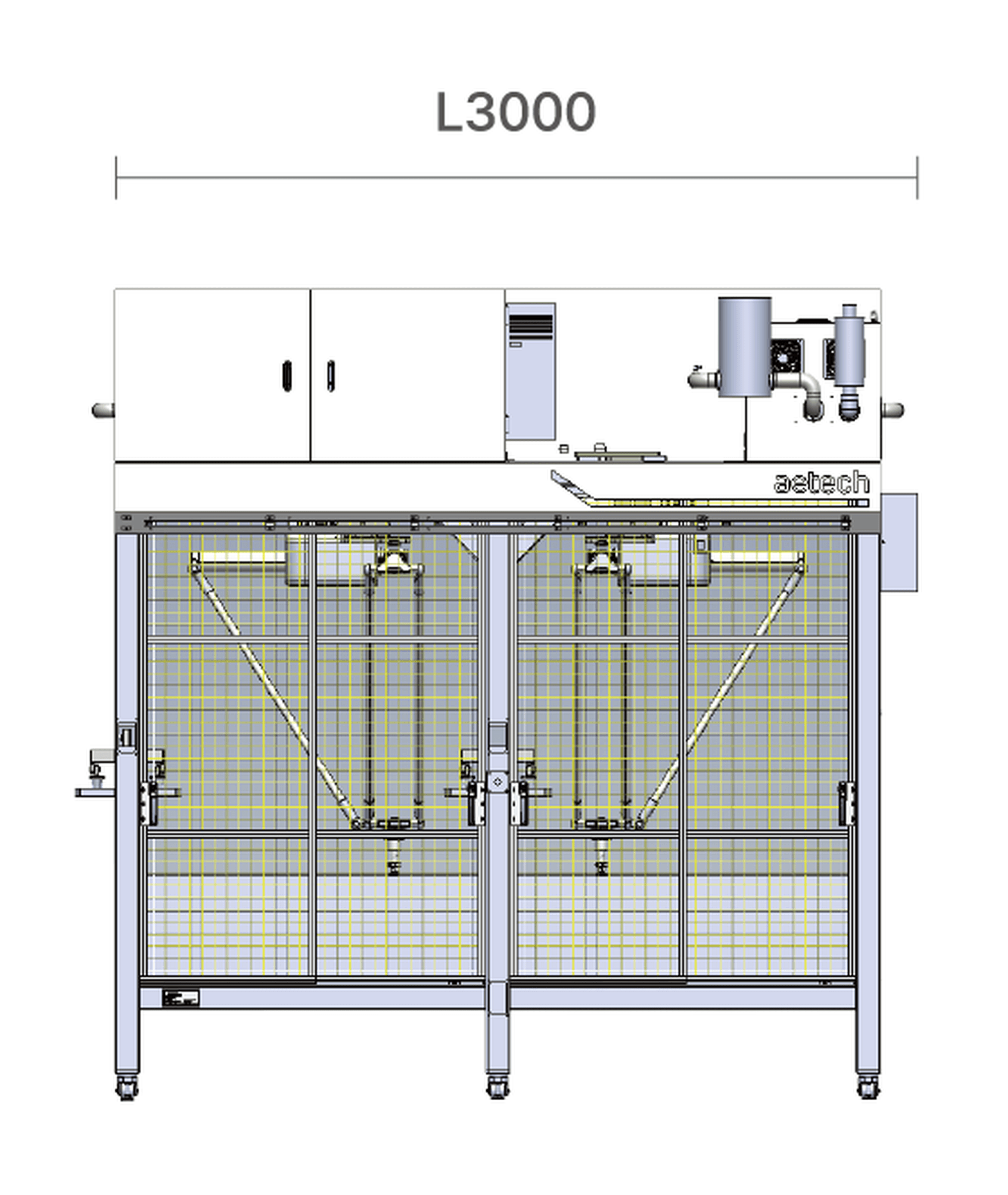
Atron E type 2in1
Commonly, automation equipment for sorting facilities is considered a 'solution for large corporations' because it requires large-scale space and massive investment. However, AI robot technology is a solution suitable for various scales of private workplaces, designed for compact space utilization and rational budgets.
In particular, Aetech's 'compact all-in-one AI robot unit (e.g., Atron-E, E 2in1)' shows a clear difference from existing large-scale customized lines as a compact 'Plug & Play' solution where an AI robot, vision camera, and small conveyor belt are configured as one package.
Now, there is no need to hesitate on automation because 'space is narrow' or 'it is a large-scale construction'. Improving the most urgent processes first with small, compact, integrated AI robots is indeed the smartest first step for private enterprises to achieve maximum effects with minimum risks.
Equipment Detail Comparison: Optical Sorter vs Integrated Small Equipment
Classification | Traditional customized sorting line (Optical Sorter, etc.) | Compact AI robot system (Integrated small equipment) |
|---|---|---|
Equipment Configuration | Complexly combining various equipment such as conveyors, sorter body, air compressor, and dust collector on-site | Module integrating various equipment such as robot, vision, controller, and small conveyor into one |
Installation Space (Footprint) | Requires wide, straight space of 10~15m or more in length | Length of around 3~4m (the space of one or two manual sorting stations) |
Installation Method | Requires large-scale civil/architectural work and full-scale line changes | 'Bolt-on' method → Simply added to existing lines |
Ancillary Works | Essential (high-capacity electricity, air piping, structural changes, etc.) | Minimization (operable only with general power supply) |
Application Targets | Large-scale new/expansion projects | Responding to partial efficiency improvement of existing facilities and automation needs in narrow spaces |
Summary | Large-scale space and incidental work → Large-scale budget required | Compared to traditional sorting lines → Burden ↓ Efficiency ↑ |
Chapter 03. Preparations before implementation
Topic 1. 3 key preparatory tasks for successful automation implementation
Task 1: Rediscovery of space - Accurate on-site measurement and drawing preparation
Task 2: Stable heart - Electricity capacity and utility checks
Task 3: Role of humans - Preparing for human resource structure and role redesign
"At a loss on what to do first when actually trying to adopt"
If you have outlined the solution suitable for our sorting facility through the guide so far, we have summarized three core tasks that need checking before full-scale implementation. Each task is 'the first step of a successful partnership' to draw out 100% of the workplace's potential together with experts.
Task 1: Rediscovery of space
Accurate on-site measurement and drawing preparation: Robots move only within a set space. Therefore, accurate information on the installation space is the most basic yet important preparation for successful automation.
What should be prepared?
Equipment layout drawing: Drawings (such as CAD) showing the equipment configuration, locations, and sizes of the current sorting facility are best. If drawings are unavailable, hand-drawn sketch maps or on-site photos/videos capable of showing the overall structure are also of great help.
Designation of desired robot installation area: If you specify the approximate location where you want the robot installed, such as "I wish it installed on this conveyor belt", we can more quickly proceed with actual measurement of the space and feasibility review.
Identification of major obstacles: It is necessary to identify pillars, piping, and protrusions of other equipment that may interfere with robot movement.
Why is it important?
Accurate measurement data is required for 'motion path and layout design' to grasp the space where the robot can be installed and optimize performance. By securing the minimum space for interference-free robot movement and maintenance work, and running 3D simulations that consider even the drop locations of sorted products, we can minimize trial and error and verify the most efficient installation scheme in advance.
Task 2: Stable heart
Electricity capacity and utility checks: Stable power to AI robots is like 'blood' to humans. Unstable power supply causes declines in robot performance and frequent errors and failures.
What should be prepared?
Check main distribution board: It is necessary to identify the total electricity capacity and current usage of the sorting facility to check for spare power capacity for robot installation. Distribution board photos or related documents are required.
Check air compressor capacity: If the robot's end effector uses pneumatic pressure, it is necessary to first check whether additional expansion of the installed air compressor capacity is needed.
Why is it important?
If the equipment is introduced without prior check and the power capacity is insufficient, the robot may stop frequently, and in the worst case, the power of the entire sorting facility may be cut off. In addition, since additional electricity expansion work can take considerable time and cost, checking and preparing the capacity in advance is absolutely necessary for stable operation and budget planning.
Task 3: Role of humans
Preparing for human resource structure and role redesign: The ultimate goal of adopting AI robots is 'human resource value enhancement' rather than 'human resource replacement'. Consideration is needed for 'role redesign' where robots replace difficult and dangerous work and humans focus on more important tasks.
What should be prepared?
Identify current human resource composition: Information on current personnel and work distribution by process is required.
Core personnel selection and role assignment: Selection of core personnel such as 'operators (robot operation and management)' and 'quality managers (final sorting quality control)', and conceptualization and education on new roles are required.
Internal communication and consensus building: Prepare internal communication plans to relieve anxiety about automation and build positive consensus (that jobs are not being replaced, but our work is changing into safer and more valuable work).
Why is it important?
Successful automation is not achieved by technology alone. The effect is maximized when accompanied by the preparation of 'humans' trying to understand and actively utilize the new system. It can minimize confusion on-site that may occur after robot introduction and provide opportunities for existing skilled personnel to grow into more highly skilled specialists, raising the competitiveness of the entire company to the next level.

Through the three preparatory tasks considered with experts, we can more objectively diagnose the current status of our sorting facility, design the most optimized solution, and eliminate risks in advance that may occur after introduction. Thorough prior preparation is the first step toward successful automation introduction.
Topic 2. Customer meeting review: Gaining trust beyond technology
Customer Review 1 - Private recycling enterprise
Customer Review 2 - Public sector
Customer Review 3 - Small and medium-sized private enterprise
Adopting AI sorting robots is an important decision designing the future of the business. To this end, we aim to become a 'solution partner' that finds the optimal answer together with customers, going beyond a simple product supplier. Look at how we listen to customers' voices and propose optimal solutions through actual stories of customers.
Customer Review 1 - Private recycling enterprise

"We met a partner who designs our factory together, rather than simply a company that sells robots."
Kim, CEO / Domestic private sorting facility
Kim, CEO / Domestic private sorting facility
"When they pointed out, 'This is where your line is struggling — change this, put the robot here, and you'll get the efficiency.' I felt at that moment, 'These people really know the field.' From the first meeting, they laid out our factory drawings and asked meticulously from conveyor belt speed to daily waste types and volumes. It was really great to discuss everything from our process flow to improvement schemes and the role of robots together. Thanks to them, the vague automation plan turned into a concrete blueprint."
→ Successful automation starts from fully understanding the customer's site. We provide consulting to diagnose existing processes and design improvement schemes together so that newly introduced robots can show optimal performance.
Customer Review 2 - Public sector

"It was reassuring because they took care of things first, from tedious paperwork to parts we missed."
Park, Officer / Local government
Park, Officer / Local government
"In public institutions, introducing a single piece of equipment is quite tricky due to budget execution or regulatory compliance. The procedures are complex, and there is a lot of paperwork to prepare. But this place understood such grievances so well. In particular, they presented concrete grounds for parts we hadn't thought of, for example, saying 'introducing robots can satisfy certain items of the government's current public sorting facility modernization guidelines'. Thanks to them, internal reporting and persuasion were much easier. Seeing them genuinely think from our side earned our trust."
→ For public sector customers, a deep understanding of administrative procedures and regulations is essential along with technical capabilities. A partnership that preemptively prepares and transparently shares necessary documents and data from the customer's standpoint leads to successful introduction.
Customer Review 3 - Small and medium-sized private enterprise

"I learned that there is a way even for our narrow and old sorting facility."
Manager Lee / ◇◇ Environment
Manager Lee / ◇◇ Environment
"I thought robots were out of reach for a small facility like ours. Because there were many difficulties in proceeding with large-scale construction with limited space and budget. When I inquired elsewhere, they said we had to change the entire line, so I was actually giving up."
"But this place heard our concerns and proposed 'compact integrated equipment perfectly fitting our manual sorting line' rather than large equipment. Seeing them come to the site directly, measure several times, and find the optimal location considering even the existing workers' movement paths, I developed trust that 'This place really finds and proposes solutions customized for customers.' We could get a clear answer of 'This is how you do it' to the realistic problems we had."
→ There is no single solution identical for all sorting facilities. The flexibility of proposing customized solutions that can yield optimal efficiency within realistic constraints of budget and space becomes the decisive reason why customers truly trust and choose us.
Topic 3. On-site case: Easy robot management
Minimizing downtime due to robot cleaning
"Who manages such complicated machines, and who fixes them when they break?"
The difficulty of maintenance. It is one of the biggest reasons for hesitating to introduce new solutions. To provide the most solid answer to these concerns, we have prepared actual customer reviews and stories about technical details.
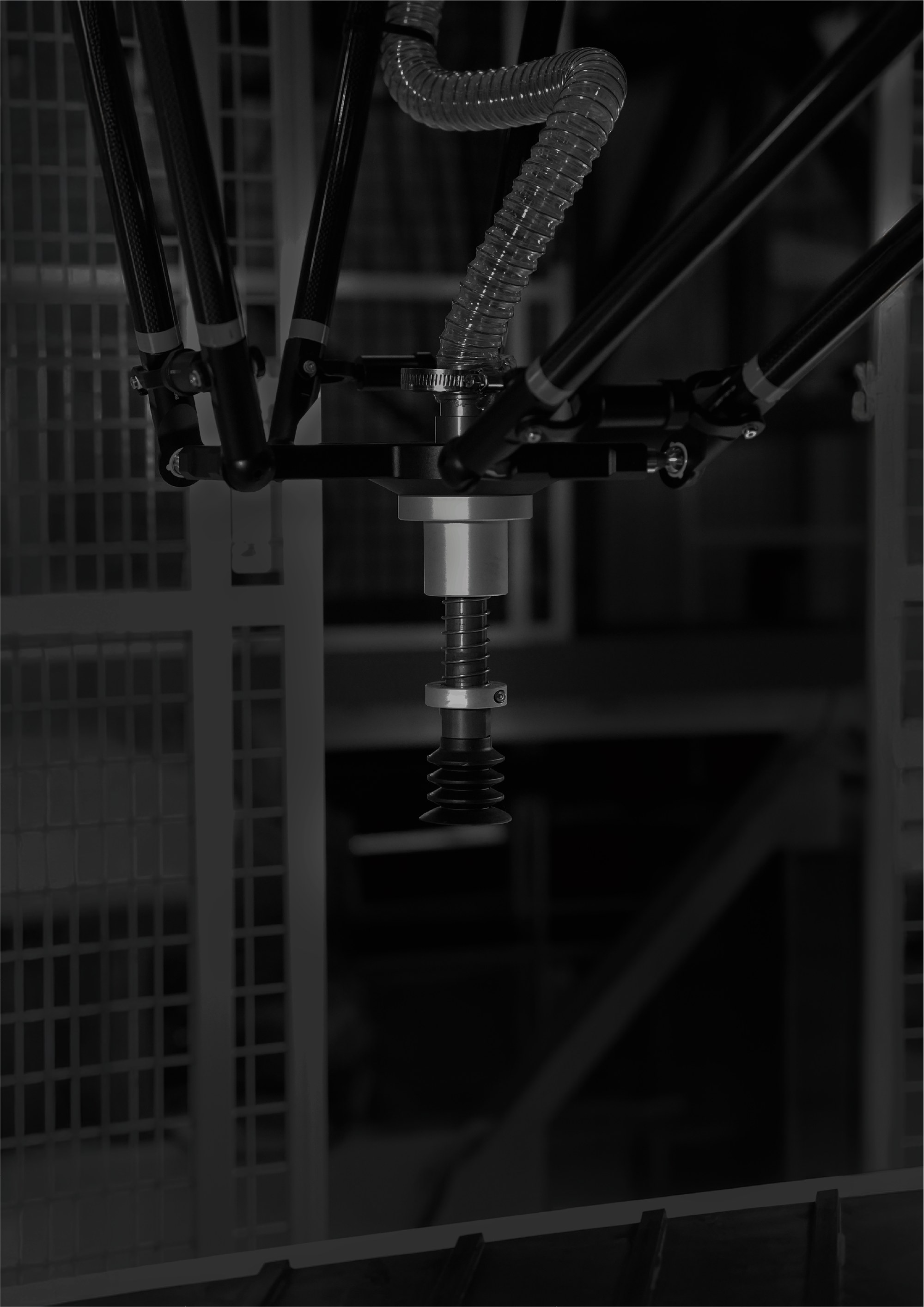
"We no longer stop lines due to robot cleaning."
Choi, Floor Supervisor / □□ Resources (On-site manager with 20 years of experience)
"Honestly, I was worried when they said robots were coming in again. Before, humans had to manage machines in the end anyway. Especially, the hand part (end effector) of the robot gets dirty quickly due to foreign substances on waste, so 'how many times a day should we stop the line to wipe that' was my biggest worry. But Atron was different. Every time the robot put down waste, it made a 'hissing' sound and shot air to shake off dust or bits of plastic film by itself. Before, we had to wipe it once every two or three hours, but now, wiping it once during lunch break or when work finishes is enough. Also, a few days ago, the suction pad wore out, so we replaced it, and we replaced it with hands in just 5 minutes without any special tools. No matter how smart the robot is, if management is inconvenient, it easily becomes a white elephant, but I feel that it was 'made convenient for humans to use' from the start. Thanks to that, I can focus more on the work I originally did without worrying about the robot."
Innovation of maintenance cycles seen in numbers
Choi's experience mentioned above is proven by data. The end effector with enhanced 'management convenience' dramatically lowers downtime and labor intensity compared to existing methods.
Classification | Typical end effector | 'Smart management' end effector (Maintenance-enhanced type) | Core Improvement Effect |
|---|---|---|---|
Cleaning Cycle | Requires cleaning every 2~4 hours due to decrease in suction power | 8 hours or more (maintains stable performance throughout a shift) | Minimizing downtime, preventing productivity loss |
Cleaning Method | Worker must directly enter the line to wipe after stopping the line | Automatic foreign substance removal function (Air-purge), simple external cleanup | Securing worker safety and drastically reducing labor intensity |
Major Consumable (Suction Pad) Replacement | Requires experts, takes more than 30 minutes (requires line stoppage) | Completed within 5 minutes by site worker (no tools required) | Enabling rapid on-site action, saving time and cost |
Details not easily seen
Differences in convenience are made in the 'details of design' that are not easily seen.
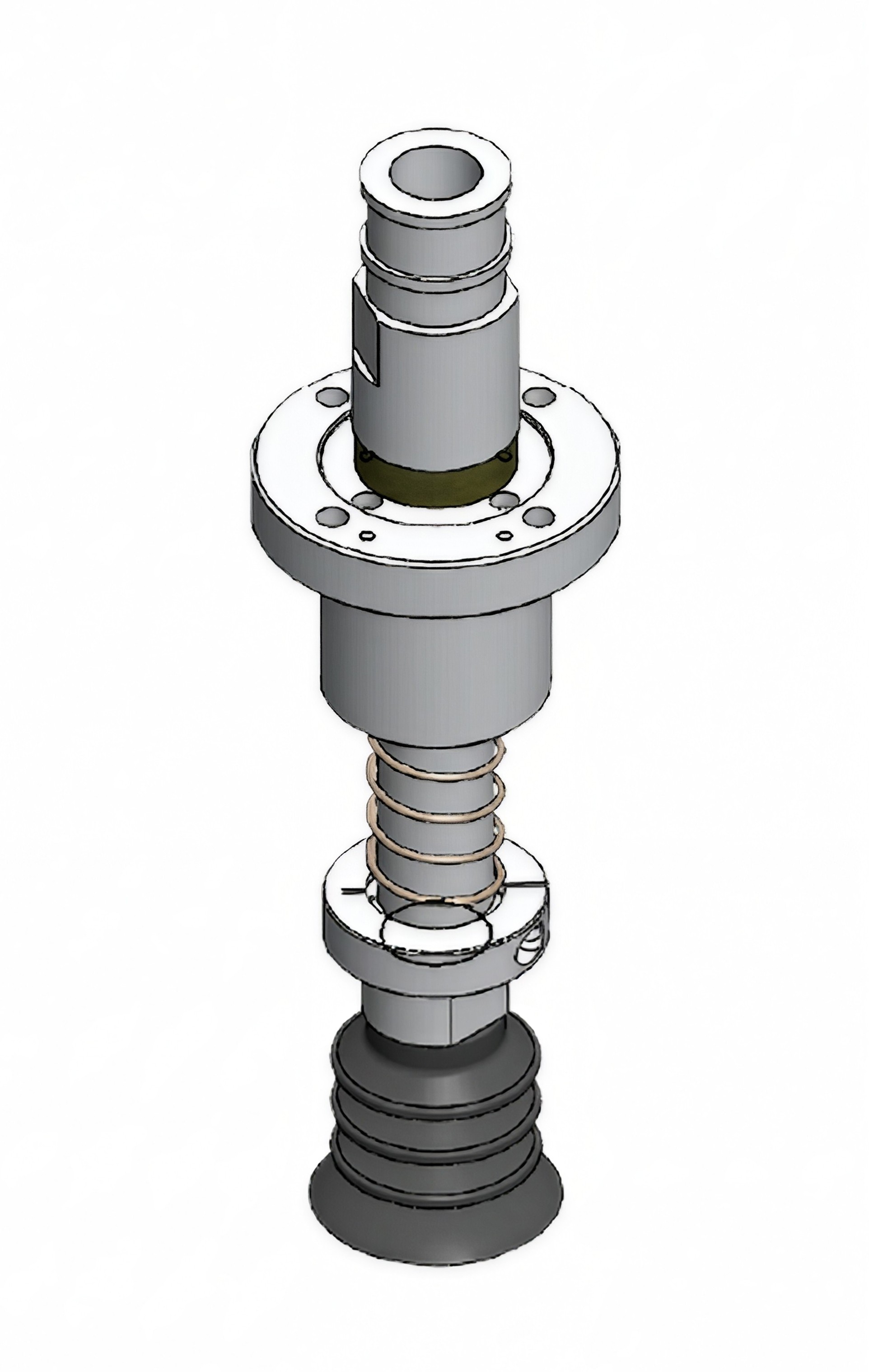
The smart management end effector of Atron
One-touch modular replacement design
Core consumables such as suction pads are designed in modular forms, enabling easy detachment and attachment with bare hands without special tools. Just like replacing a printer ink cartridge, any on-site worker can take action quickly without the help of experts.
Automatic Cleaning (Air-Purge) Structure
Every moment the robot puts down sorted products, it momentarily sprays compressed air to shake off foreign substances on the surface of the suction pad by itself. And this efficiently prevents downtime occurrences where suction power drops, lowering accuracy and stopping machines.
Chapter 04. Implementation Process
Topic. Implementation process at a glance: From design to sustainable operation
3-step implementation process
We don't just install equipment. We aim to stably settle technology in the field through close consultation with customers and grow its value together through continuous partnerships. The implementation process prepared for this proceeds through a transparent 3-step journey.
3-step implementation process
Perfect understanding of customer site + Optimal solution design + Stable operation
STEP 1 — Customized Solution Design (Consultation ~ Contract)
1-1. On-site Survey and Consulting
Experts visit the site directly to precisely diagnose space, processes, and waste characteristics, and listen to customers' concerns and goals.
1-2. Optimal Solution Proposal
Based on diagnosis results, we propose concrete customized solutions based on 3D simulations, including robot types, optimal installation locations, expected throughput, and expected effects.
STEP 2 — Production and Installation Construction (Contract ~ Final Inspection)
2-1. Production and Prior Testing
After contract, we produce equipment tailored to proposed specifications and proceed with sufficient prior testing at our own test bed before shipping to minimize problems that may occur during site installation.
2-2. Site Installation and Initial Operation
We quickly complete site installation with a schedule that minimizes impacts on client operations and start initial operation.
STEP 3 — Sustainable Operation and Maintenance (After Final Inspection ~)
3-1. Operator Training
We provide systematic training to help on-site workers smoothly operate and manage robots.
3-2. Remote Monitoring and Regular Inspections
We monitor the status of robots in real time through a remote monitoring system and maintain peak performance with regular visit inspections.
3-3. Continuous Updates
In case of market changes or generation of new sorting items, we remotely update software to continuously upgrade robot performance.
Report Summary
Domestic sorting facilities now stand at a major crossroads. Labor shortages, an aging workforce, safety risks represented by the Serious Accidents Punishment Act, and the government's tightened policy pressure show that the existing manual-centric methods can no longer hold out. In particular, the subsidy policy that differentially pays up to 8 times based on the quality of sorted products is directly linked to profitability, meaning you will inevitably fall behind in competition if you cannot respond immediately. As such, automation is not a simple work method upgrade but the only path to ensure survival and growth.
Automation centered on AI sorting robots is applied on-site in a customized way. For traditional sorting facilities with high reliance on manual labor, deploying robots in remnant lines dramatically reduces safety accidents and cost burdens, while for sorting facilities possessing optical sorters, placing robots at the rear can pull up sorting quality to 95% or more, securing high subsidies and premium unit prices.
Facilities planned for new construction or modernization can secure long-term competitiveness through full-automation linking pre-treatment, main sorting, and post-treatment processes, and even small private businesses can experience efficiency transcending space and budget constraints through integrated small equipment.
The introduction of automation is by no means complex or burdensome. With basic preparations such as site measurement, power capacity checks, and role redesign of personnel, stable transition is possible within 10 to 12 weeks. Moreover, recent robots are equipped with automatic cleaning and one-touch replacement functions, minimizing maintenance burdens. In the end, automation is not a simple equipment investment but a strategic solution that simultaneously realizes cost reduction, revenue creation, regulatory response, and preempting future markets.
Leading The Future of Circularity
Report Title: Sorting Facility Automation Guide
Written by: Aetech, Co.,Ltd
© 2026, Aetech. All rights reserved.

