Responding to Changing Recycling Policies with AI Sorting Technology
Report

Report TL;DR
The global waste sorting and recycling industry is currently at a massive turning point. Economies such as the European Union (EU), the United States, and South Korea are accelerating their transition to a circular economy to address environmental issues and resource depletion, and are introducing strong policies.
However, the existing recycling sorting system centered on manual sorting faces challenges such as low actual recycling rates, an aging workforce and safety issues, and a lack of precision in existing equipment. These limitations make it hard to keep pace with policy changes and the risks that come with them.

In this situation, AI-based technology is emerging as an essential solution, no longer an option. Through the actual adoption cases included in this report, you can see how AI sorting technology is creating synergy with previously adopted sorting systems from a complementary perspective to effectively respond to policy changes. You can also see how Aetech is resolving previously impossible challenges and creating new possibilities for resource circulation.
Now, AI sorting technology is moving beyond the simple adoption of equipment to establish itself as an essential survival strategy and a core asset for future competitiveness for both the public and private sectors.
Table of Contents
Global Policy Changes and Strengthening of Recycling Standards
Flow of Policy Changes in Major Countries
Strengthening Global Recycling Standards
Expected Risks of Not Meeting Standards
Reasons Why the adoption of AI Sorting Technology is Necessary
Limitations of Existing Sorting Methods
Comparison of Optical Sorters and AI Robot Sorters
AI is a Synergy, Not a Replacement
Analysis of Actual Adoption Cases
Analysis of the case of Daeyoung Enterprise in Ulsan
Practical Value Gained by Private Enterprise
Technology Starting from Problems, Technology Expanding Boundaries
Is this possible too?
The Importance of Technological Flexibility
Chapter 01. Global Policy Changes and Strengthening of Recycling Standards
Topic 1. Flow of Policy Changes in Major Countries
European Union (EU)
United States
South Korea
As awareness of resource depletion and environmental issues grows globally, governments around the world are strengthening waste management and recycling policies, accelerating the transition to a 'circular economy'.
These policy changes in major countries further emphasize the need for technological transition and strategic response in recycling waste sorting facilities.
European Union (EU) 🇪🇺
Key Point — Strengthening Powerful and Comprehensive Regulations Toward a Circular Economy
The EU has set the transition to a circular economy as one of the key goals of the 'European Green Deal' and is releasing a series of specific and legally binding regulations for this.
Europe - 3 Major Policies and Flows
Waste Shipments Regulation
This new regulation, which comes into force in May 2024, more strictly controls waste exports from the European Union (EU) to non-OECD countries. Countries importing waste must demonstrate their ability to manage waste in an environmentally sustainable manner, and starting in November 2026, exports of plastic waste to non-OECD countries will be completely banned. This measure can be understood as part of a strategy to strengthen responsibility for waste generated within the EU and to promote sustainable development by vitalizing the regional recycling market.
Circular Economy Action Plan
Since 2015, the EU has pursued comprehensive policies to reduce waste generation and promote reuse and recycling through the Circular Economy Action Plan. This policy includes increasing product durability and energy efficiency, expanding the use of recycled content, and preventing planned obsolescence, and contains specific strategies for key areas such as textiles, electronic waste, and batteries. In addition, it further emphasizes the importance of the circular economy in connection with the 'Critical Raw Materials Act', which strengthens recycling and recovery to ensure a stable supply of key raw materials.
Packaging and Packaging Waste Regulation (PPWR)
This regulation, which entered into force in February 2025 and has applied since August 12, 2026, contains new requirements for all packaging materials released into the EU market. By 2030, all packaging must be designed to be economically viably recyclable, and in the case of plastic packaging, target minimum recycled content rates have been established. It also aims to manage the entire life cycle of packaging materials by reducing unnecessary packaging, limiting the use of certain single-use plastic packaging materials, and encouraging reuse and refill systems.
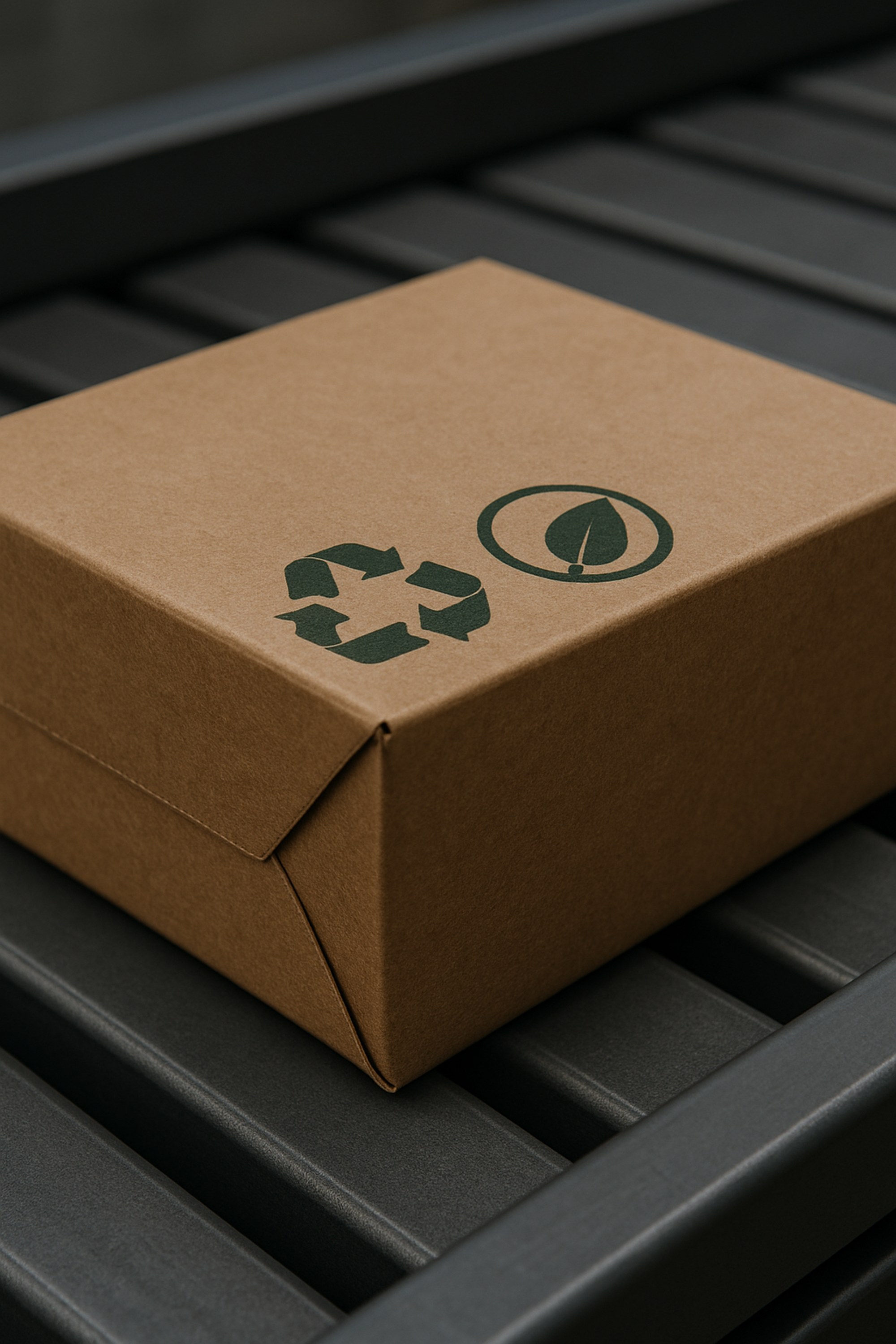
In the EU, all packaging must be designed to be recyclable in an economically viable way by 2030, and in the case of plastic packaging, target minimum recycled content rates have been established.
United States 🇺🇸
Key Point — Setting Federal Government Targets and Spreading State-Centered Autonomous Regulations
The United States does not have strong mandatory recycling regulations at the federal level. However, it is attempting change by presenting national goals centered on the Environmental Protection Agency (EPA) and introducing specific policies at the state government level.

State-level EPR laws in the US require packaging producers to bear the cost of waste management, encouraging the design of packaging materials that are easy to recycle.
United States - 3 Major Policies and Flows
National Recycling Strategy
This strategy, announced by the EPA in 2021, aims to achieve a 50% recycling rate by 2030. It presents five strategic goals: improving recycled materials markets, improving collection and infrastructure, reducing recycled materials contamination, strengthening policies supporting circularity, and strengthening measurement standardization and data collection. This is part of the federal government's effort to provide direction and encourage collaboration among stakeholders.
Regulations of Individual States and Local Governments
In the absence of comprehensive federal regulations, many states and local governments are implementing their own regulations, such as landfill bans on specific items, setting recycling targets, and implementing bottle bill deposit systems. While this decentralized approach can make the US recycling system complex and inconsistent, it serves as a foundation for various policy experiments tailored to the characteristics of each region.
Spread of Extended Producer Responsibility (EPR)
The biggest recent change in US recycling policy is that EPR bills for packaging materials are spreading on a state-by-state basis. Starting with Maine, several states including Oregon, Colorado, California, Minnesota, and Washington have adopted EPR bills. These bills stipulate that packaging producers bear all or part of waste management costs, such as collection, sorting, and recycling of products, aiming to induce the design of easily recyclable packaging starting from the production stage and to secure stable financial resources for the recycling system.
Sunset Park Material Recovery Facility (MRF) in Brooklyn, New York
The Sunset Park Material Recovery Facility (MRF), located in Brooklyn, New York, is the largest in North America and is a key hub for processing residential recycled waste from all across New York City. It processes more than 1,000 tons of waste daily and 500,000 tons annually, showing high efficiency while being operated by a workforce of just 115 people.
Adoption of Advanced Automated Facilities
At the core of this achievement are advanced automation technologies such as optical sorters, robotic arms, drum magnets, and disc screens. Through technological innovation, dependency on workforce was reduced while sorting accuracy was increased, which led to processing cost reduction and improvement in sorting quality. The purity of the final recycled product bales coming out of Sunset Park is around 95%, attracting interest from global companies. The mere existence of this facility in North America allows regional companies that have declared carbon neutrality to seek enhanced competitiveness in terms of raw material sourcing.
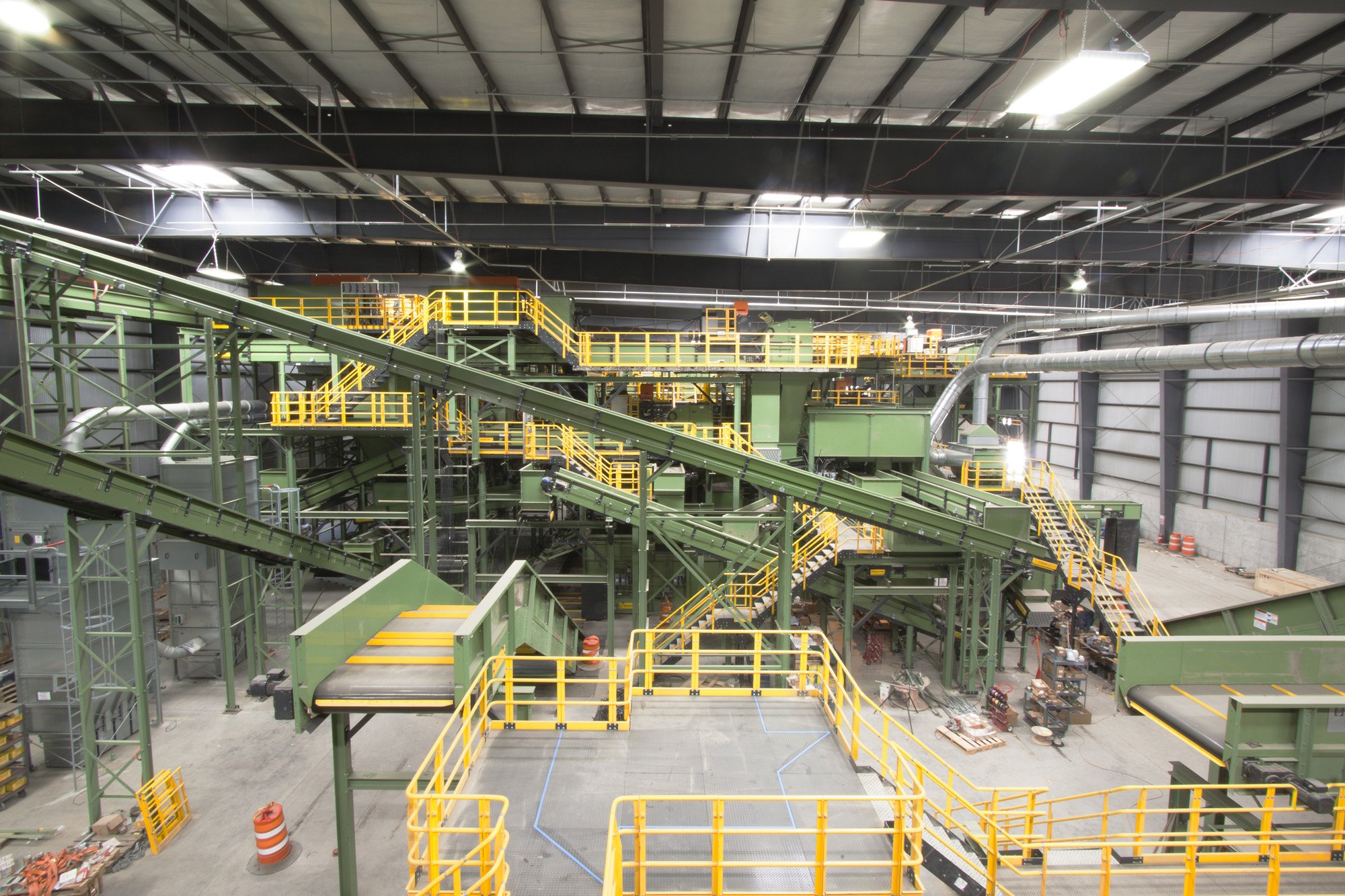
Modernized automated facilities at the Sunset Park Material Recovery Facility (MRF)

Full view of the Sunset Park Material Recovery Facility (MRF) in New York
Private Investment and Participation of Global Companies
The operator is Sims, an Australian recycling company, and more than $100 million was invested in initial facility construction. Recently, the Closed Loop Partners (CLP) investment consortium acquired shares, and during this process, global companies such as Nestle, PepsiCo, and Unilever actively participated as part of securing recycled content and strengthening ESG management.
Policy Foundation and Administrative Support
New York City has mandated recycling collection since 1989, and during Mayor Bloomberg's term, laid the foundation for public-private cooperation through administrative support such as long-term contracts and free site provision. This policy backing guaranteed the stability of private investment and enabled sustainable infrastructure operation.
Social and Educational Ripple Effects
The Sunset Park facility does not stop at being simply a waste processing plant, but functions as an environmental education site visited by more than 8,000 citizens, students, and public officials every year. This has the effect of raising citizen awareness of recycling policies and increasing policy credibility.
Korea 🇰🇷
Key Point — Promoting Circular Economy Advancement Based on Long-standing EPR Experience
Korea was an early adopter of EPR, introducing it in 2003, Korea has recently been detailing policies to accelerate the transition to a 'circular economy'.
Korea - 3 Major Policies and Flows
Framework Act on Resources Circulation and Transition to a Circular Economy
The 'Framework Act on Resources Circulation', enforced in 2018, established the legal foundation to create a society that suppresses waste generation and promotes circular utilization. This act adopts systems such as the resource circulation performance management system and waste disposal fees to induce resource circulation efforts from businesses and local governments. Recently, it was completely revised into the 'Act on Promotion of Transition to a Circular Economy Society', further strengthening the implementation of the circular economy through the establishment of durability and repairability standards for the sustainable use of products and the circular resource certification system.
'CE 9' Project and Industry-Specific Circular Economy Strategies
In 2023, the government announced the '9 Major Leading Projects for a Circular Economy (CE 9)' targeting nine major industries including petrochemicals, steel, non-ferrous metals, batteries, electronics, textiles, automobiles, machinery, and cement. This project aims to build customized circular economy models considering industry-specific characteristics, such as expanding the production of waste plastic pyrolysis oil, establishing waste battery recycling foundations, and recycling key minerals.
Strengthening Management of Major Items Such as Plastics
To resolve the plastic waste problem, targets were set to reduce plastic waste generation by 50% and achieve a 70% recycling rate by 2030. To this end, the production of colored PET bottles is banned, and packaging material grades are evaluated according to ease of recycling to levy differentiated recycling fees on producers, encouraging easily recyclable product designs. In addition, from 2023, the use of recycled content is being promoted by imposing a 30% recycled content use obligation by 2030 on companies producing 10,000 tons or more of PET annually.
Analysis of the Lee Jae-myung Administration's Recycling Policy in 2025
The Lee Jae-myung administration, launched in June 25, has set carbon neutrality and building a circular economy as key national tasks, and is pushing for structural reorganization and system strengthening across industry and environment.
Ministry of Trade, Industry and Energy
To leap forward as a carbon-neutral leading nation, the strategy and means for achieving the 2035 Nationally Determined Contribution (NDC) greenhouse gas reduction target are being completely revamped, and large-scale research and development (R&D) such as hydrogen reduction steelmaking and bio-raw material conversion are being supported. In addition, the ministry seeks to respond to overseas regulations by expanding facility investment for carbon reduction, promoting domestic demand for low-carbon products, establishing corporate carbon emission management and data platforms, and improving energy efficiency by distributing zero-energy buildings and improving green building certification.
Along with this, it plans to secure global competitiveness by activating business models based on the circular economy such as remanufacturing, reuse, and recycling, and introducing the resource efficiency grade system and recycled content certification system.
Ministry of Environment
To establish a circular economy ecosystem, a full life cycle plastic-free roadmap will be prepared, and the mandatory use ratio of PET bottle recycled content will be raised to 30% by 2030. In addition, sustainable product design is being promoted through the adoption of Korean-style eco-design and improvement of packaging material quality and structure, and the recovery system is being advanced by strengthening unmanned recovery machines, recovery compensation systems, and extended producer responsibility systems.
Furthermore, circular utilization systems for each item such as waste batteries, solar panels, and waste clothing are being established in parallel with production certification systems and resource recovery technology development, and active expansion of the circular economy is being prepared by promoting the Heat Link project through CE100 participation expansion and RE100 industry linkage.
Through these policy efforts, the government expects to realize resource conservation and greenhouse gas reduction while strengthening the capability to respond to overseas carbon regulations, creating new markets and industries, and expanding jobs based on the circular economy. Consequently, it is projected that industrial competitiveness will be strengthened and the foundation for a sustainable economy and society will be more firmly consolidated.
Topic 2. Strengthening Global Recycling Standards
Expanding and Strengthening 'Producer Responsibility'
Mandatory Material-Specific Recovery and Use of recycled content
Mandated Advancement of Sorting Technology
As the transition to a circular economy accelerates worldwide, recycling policies are being strengthened in a direction that mandates more responsibility and the use of recycled content from producers, and requires the advancement of sorting technology. This is a strong expression of will to systematically circulate resources and minimize environmental impact, moving beyond simply processing waste.
Expanding and Strengthening 'Producer Responsibility'
The 'Extended Producer Responsibility (EPR)', where producers are responsible for recycling even after product use, is establishing itself as a global standard.
European Union (EU) 🇪🇺
The EU's 'Packaging and Packaging Waste Regulation (PPWR)' is a representative case that significantly expanded the scope of producer responsibility. This regulation specifies that producers take environmental responsibility across the entire life cycle of packaging materials. In particular, it imposes obligations to design products to be easily recyclable, bear recycling costs, and provide accurate separation and discharge information to consumers. It also encourages eco-friendly design by levying differentiated EPR fees according to ease of recycling (eco-modulation).
United States 🇺🇸
Although there is no single federal regulation, the adoption of state-level EPR bills is rapidly spreading. Starting with Maine, Oregon, Colorado, California, etc. have passed EPR bills for packaging materials, and California's 'Plastic Pollution Prevention and Packaging Producer Responsibility Act (SB 54)' stipulated that producers establish a 'Producer Responsibility Organization (PRO)' and pay into a fund to directly bear the operational costs of the packaging collection and recycling system. This is a significant shift of waste management responsibility from taxpayers to producers.
South Korea 🇰🇷
Korea pioneerly adopted the EPR system in 2003, and has recently been further strengthening producer responsibility through the 'Act on Promotion of Transition to a Circular Economy Society'. It granted duties to make efforts to consider circular utilization potential from the product design stage, secure high durability and ease of repair, and expand the use of circular raw materials. It is also inducing voluntary efforts from producers by applying differentiated fees according to ease of recycling.
Mandatory Material-Specific Recovery and Use of Recycled Content
Each country is presenting specific figures to raise recycling targets, and is legally mandating the use of recycled content, particularly centering on plastics.
European Union (EU) 🇪🇺
The EU's PPWR requires designing all packaging to be recyclable by 2030, and has established specific 'minimum recycled content ratios' by material. By 2030, PET packaging must mandatorily use 30% of recycled content, and other plastic packaging must use 10-35%. This ratio is scheduled to be adjusted upwards to a maximum of 65% in 2040. In addition, it aims to achieve a packaging recycling rate of 70% by 2030.
United States 🇺🇸
California's SB 54 bill requires making all single-use packaging and plastic food service ware recyclable or compostable by 2032. It also set plastic packaging recycling rate targets to be raised step-by-step, to 30% by 2028, 40% by 2030, and 65% by 2032. The bill being pushed in New York State also requires a 30% reduction in plastic packaging use over the next 12 years, and designing 75% of overall packaging to be recyclable by 2052.
South Korea 🇰🇷
The government clarifies the recycling responsibility of producers by announcing recycling obligation rates for each product and packaging material in 2024. In addition, it is step-by-step mandating the use of plastic recycled content, such as imposing a 30% recycled content use obligation by 2030 on companies producing 10,000 tons or more of PET annually. The 'Act on Promotion of Transition to a Circular Economy Society' established the legal foundation for raising recycling rates by stipulating the setting and management of 'circular utilization rates' as a mid- to long-term national goal.
Mandating Adoption of Sorting Technology Such as 'Optical Sorters'
To meet heightened recycling targets and recycled content quality standards, the adoption of advanced technologies such as optical sorters and AI-based sorting systems is being required.
European Union (EU) 🇪🇺
Rather than explicitly mandating specific equipment, the EU is indirectly forcing the advancement of sorting technology by setting high recycling targets and quality standards. In particular, to meet the material-specific recycled content use obligations required by the PPWR, it is essential to stably secure high-quality recycled content. For this, the adoption of advanced automated sorting technologies such as optical sorters that quickly and accurately classify plastic materials like PET, PE, and PP is virtually essential.
United States 🇺🇸
The US is also investing funds raised through state EPR bills into improving recycling infrastructure. This can be utilized as funding to modernize outdated sorting facilities and adopt advanced equipment such as optical sorters. As various states, including California, impose high recycling rate targets, technology investments to increase sorting efficiency and accuracy are projected to accelerate.
South Korea 🇰🇷
The government made clear a policy mandating the installation of optical sorters in public sorting facilities as part of its circular economy vitalization policy. It aims to modernize 62.6% of public sorting facilities by 2026, and is expanding financial support for private sorting facilities to adopt advanced equipment such as AI-based sorting systems. This is a measure to expand high-quality recycled content production by increasing the sorting accuracy of recyclable items.

Recycling standards are rising for the transition to a circular economy, and the adoption of sorting technology to achieve this is being mandated (Photo: Aetech's AI robot solution, Atron's monitoring screen)
Global Companies Creating Innovation in Recycling Sorting Plants
The strengthening global standards are ultimately driving innovation of tech companies for modernized recycling sorting facilities.
AMP Robotics (United States)
AMP (AMP Robotics) is a company that modernizes recycling infrastructure using artificial intelligence (AI) and robotics. Through automated waste sorting systems using robotic arms, it focuses on increasing resource recovery rates, reducing labor costs, and recovering recycled content for the global supply chain. As a leader in the waste sorting market, it provides AI-based smart sorting solutions to shift the economics of the recycling industry and help achieve higher recycling rates and resource recovery.

Greyparrot (United Kingdom)
Greyparrot is a London-based AI startup that adopted 'Deepnest', the world's first AI-based waste data platform. This platform analyzes more than 40 billion packaging waste items every year through AI camera systems installed in material recovery facilities (MRF) worldwide, and turns this into actionable data to help brands accurately grasp the classification and recycling status of packaging materials.
Aetech (Korea)
Aetech is a resource circulation innovation company that sorts waste using AI and robot technology and produces high-quality recycled content based on this. In 2020, it developed 'Atron', an AI-based recycling waste sorting robot, and delivered it to public and private enterprises. Based on Atron, it is currently constructing 'Airo-MRF', an unmanned resource recovery center, in Seo-gu, Incheon. Airo-MRF is expected to showcase a more advanced form of sorting plant by fully automating not only sorting but also loading/unloading and PET flake production, innovating disadvantages such as labor shortages, safety issues, low sorting accuracy, and short operational running times that have been pointed out as chronic problems of manual sorting-centered sorting plants.

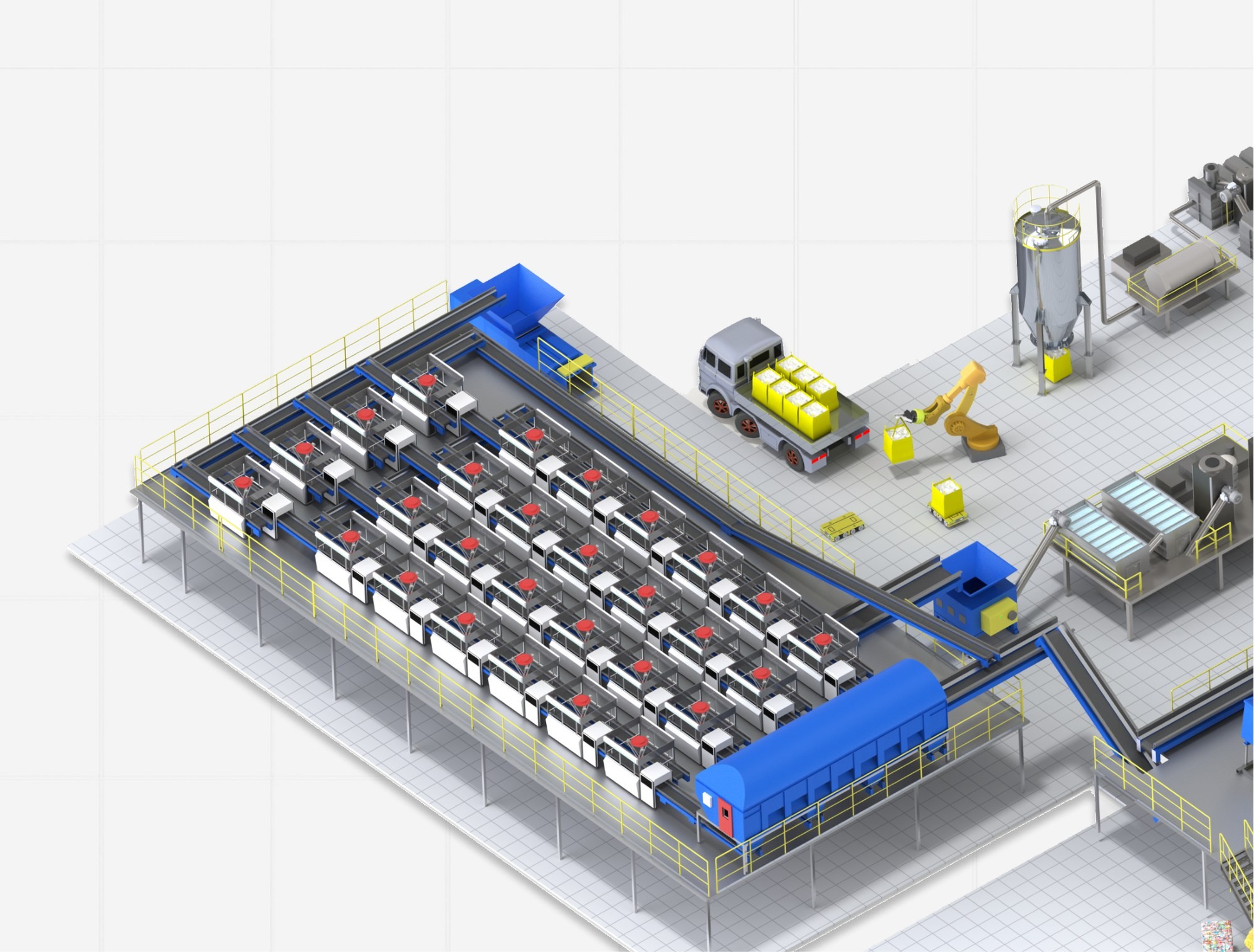
Airo-MRF, Aetech's unmanned resource recovery center currently under construction in Seo-gu, Incheon as of 2025
Topic 3. Modernization of Public Sorting Plants (Korea)
Mandatory Installation of Automatic (Optical) Sorters
AI Sorter, a Core Technology Recognized and Supported by the Government
Risks When Falling Short of Strengthened Policy Standards
The government presented a specific target to modernize 63% of all public sorting plants by 2026, and is promoting the mandatory installation of automatic (optical) sorters in public sorting plants and the strengthening of related standards.
AI-based sorting technology is also recognized as a next-generation innovative technology for modernizing sorting plants and can receive government support.
Mandatory Installation of Automatic (Optical) Sorters
Under the judgment that it is difficult to achieve strengthened recycling targets and quality standards with past manual-centered sorting methods, the government is legally mandating the construction of automated facilities in public sorting plants.
Acceleration of Public Sorting Plant Modernization
The government presented a specific target to modernize 63% of public sorting plants (187 sites) from manual sorting to AI and optical sorting methods by 2026 through 'Measures for a Full Life Cycle Plastic-Free'. This shows the government's strong will to improve outdated facilities and maximize sorting efficiency.
Basis Guideline | Key Contents |
|---|---|
Guidelines for Installation and Operation of Public Recycling Infrastructure (Directive No. 1581) | This guideline stipulates matters for the efficient installation and operation of public recycling infrastructure (household resource recovery centers) installed by heads of local governments. 'Automatic sorting facilities' within the guidelines are defined as "facilities that add plastic automatic sorters such as near-infrared sorters to mechanical sorting facilities", clarifying that optical sorters are the core of automatic sorting facilities. |
Guidelines on the Installation and Operation of Municipal Waste Sorting Facilities (Ministry of Environment Notification) | Recent amendments stipulate specific matters regarding the installation of optical sorters for sorting efficiency. In particular, sorting plants with a daily processing capacity of 10 tons or more must install at least one line of optical sorters to sort all target plastics (PE, PP, PS, PET, etc.), virtually mandating the installation of optical sorters for sorting the four major materials. |
AI Sorter, a Core Technology Supported by the Government
AI-based sorting technology is recognized as a next-generation technology that goes beyond simple optical sorters to more precisely recognize and classify materials and shapes through deep learning. It is also clearly included as a target of government support.
Government Policies and Support Projects Related to AI Sorters
Public Sorting Plant Modernization Project: The Ministry of Environment supports projects to newly build, expand, and modernize outdated public sorting facilities, and the core is the installation of automatic sorting facilities (optical sorters, etc.). Recently, it has been actively encouraging the adoption of AI technology by specifying 'AI-based sorting facility automation and modernization' as a support target.
Recognition as Government Innovation and Technology Development Project: The Ministry of Environment and the Ministry of Science and ICT received the Government Innovation Grand Prize for cases like 'AI-based Flood Safety Network Construction', recognizing AI technology as a core tool for solving public problems. In addition, the Ministry of SMEs and Startups is expanding the adoption of AI technology in the public sector by selectively supporting companies with high growth potential through the 'AI-based Technology Evaluation Platform (K-TOP)'. This implies that AI technology can be recognized as an innovative technology in the recycling sorting field as well and receive government support.
Government Inquiry Reply Case: If a formal inquiry is made to the Resource Circulation Division of the Ministry of Environment or the Korea Environment Corporation regarding whether AI sorters are eligible for national subsidy support for their adoption, a positive reply can be received stating that they are included in the categories of 'automatic sorting facilities' and 'modernization projects'. In addition, indirect verification is possible through cases of state funding support for the adoption of AI sorters in multiple local governments.
Risks When Falling Short of Strengthened Policy Standards
Public sorting plants are expected to face direct financial losses along with serious disruptions in stable operations if they fail to meet the strengthened standards.
Supply Limitations
Quality grade standards for each sorting facility for high-quality recycling are prepared, and sorting subsidies are paid differentially according to this. Since manual-centered sorting methods make it difficult to minimize foreign matter mixing and maintain a high quality grade, delivery unit prices to recycling companies may drop, or in severe cases, the delivery itself may be rejected.
In particular, for high-value-added recycling items such as transparent PET bottles of food container grade, separate strict sorting and management standards apply, making it almost impossible to generate revenue through those items without automated facilities.
Non-payment and Reduction of Subsidies
Differentiated Sorting Subsidies: The Ministry of Environment is implementing a policy to pay subsidies differentially up to 8 times according to the ratio of foreign matter in sorted products. Facilities showing low sorting efficiency without introducing automated facilities will virtually be put in a situation where they must give up a significant portion of the subsidies.
Exclusion from National Subsidy Support: The government's recycling infrastructure modernization project is promoted on the premise of introducing automatic sorting facilities. Therefore, if there is no automation plan when improving or expanding facilities in the future, there is a very high possibility of being pushed back or excluded from national subsidy support targets.
Administrative Disadvantages and Operational Disruptions
Disadvantages in Local Government Waste Processing Evaluation: The government regularly investigates and evaluates waste processing projects and facility installation/operation status of local governments. Local governments with low sorting efficiency and lacking facility modernization efforts may receive low grades in evaluations, leading to administrative disadvantages.
Difficulties in Private Consignment Operation: When public sorting plants are consigned to the private sector for operation, it may become difficult to find competent consignees due to difficulties in securing profitability with outdated facilities, or operations may face difficulties such as rising consignment costs due to frequent breakdowns and low efficiency.
Chapter 02. Reasons Why the Adoption of AI Sorting Technology is Necessary
Topic 1. Limitations of Existing Methods
Poor Actual Recycling Rate
Severity of Manual Labor Dependence
Technical Limitations of Existing Automated Equipment
Now, as recycling obligations are strengthened globally and demand for high-quality recycled content is skyrocketing, existing recycling sorting methods can no longer meet the demands of the times.
Stagnant recycling rates, inefficiency and safety issues due to dependence on manual labor, and technical limitations of existing equipment clearly show the need for innovative alternatives such as AI sorting technology.
Poor Actual Recycling Rate
The problem persists where a significant portion of recyclable items separately discharged through citizens' efforts are discarded again during the sorting stage.

Material Recycling Rate 18%
Superficial Recycling Rate
According to government statistics, the recycling rate of separately discharged waste plastic is 54%. However, this is a figure that includes energy recovery (incineration), etc., and the 'material recycling rate' where plastic is reborn as plastic is only about 18% as of 2020 (estimated). In the waste industry, considering field situations, it is estimated that the actual recycled rate stops at around the 30% level.
Contamination and Composite Material Problems
When general waste is mixed with recyclable items or contaminated with foreign matter, recycling quality drops significantly, leading to inevitable disposal during the sorting process. In addition, various plastic materials (PET, PP, PS, etc.) that are difficult for the general public to distinguish with the naked eye are discharged in a mixed state, and there are many composite material packaging items, dropping the efficiency of manual sorting.
Severity of Manual Labor Dependence
The domestic recycling system still heavily relies on manual labor, which gives rise to several structural problems.
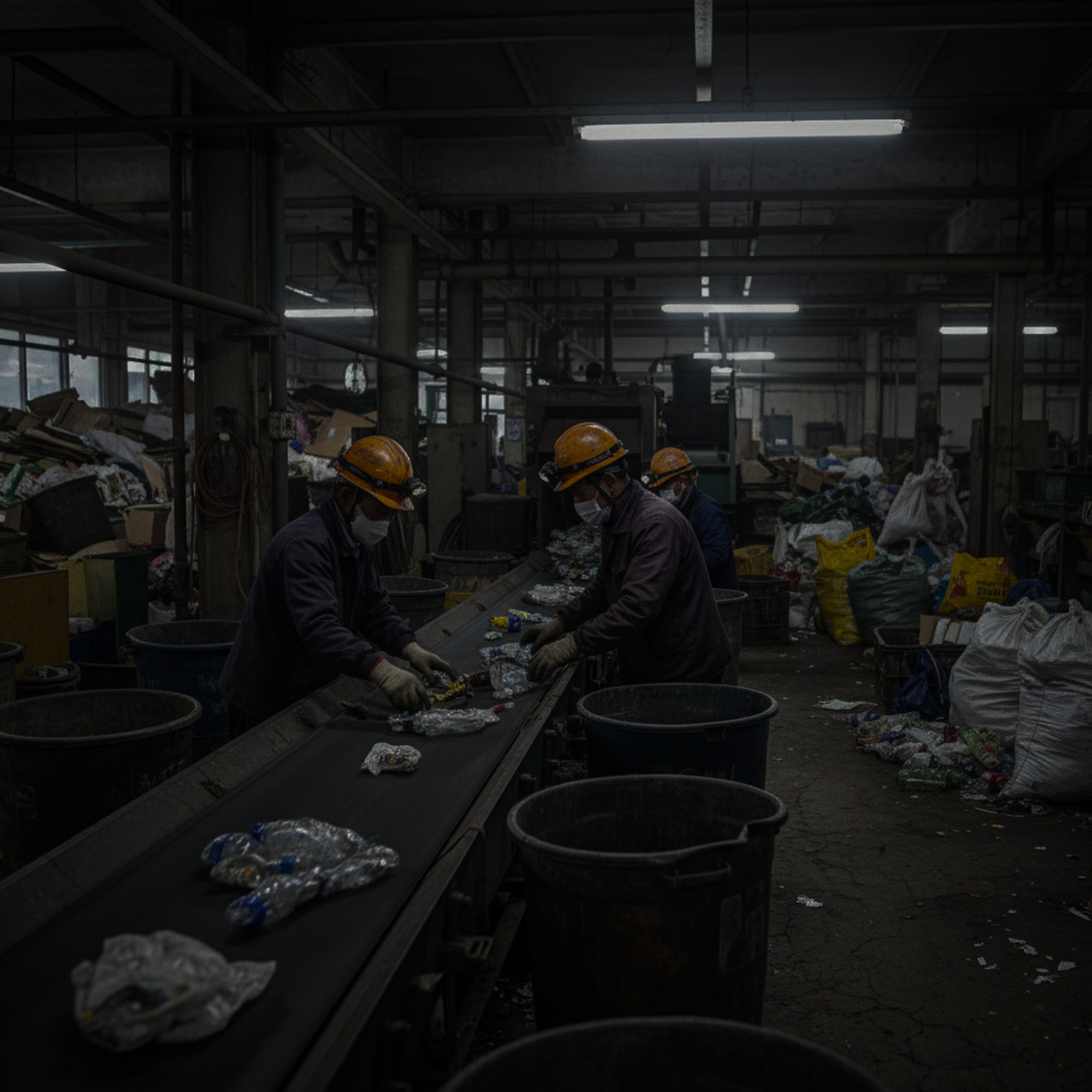
Dangerous and Poor Labor Environment
Among domestic public sorting plants, 71.4% rely on manual labor. Sorters must pick waste by hand that passes quickly over a conveyor belt. During this process, accidents where workers are punctured or cut by sharp glass fragments or syringe needles occur frequently. They are also exposed to very poor environments such as dust, odor, noise, and high indoor temperatures in summer, which cause respiratory and musculoskeletal diseases.
Aging and Labor Shortages
Recycling sorting work is a representative 3D industry where avoidance is severe, and the majority of employees are elderly female workers. This leads to chronic labor shortages, causing inability to process massive amounts of waste on time.
Limitations of Sorting Accuracy
When people perform sorting work depending on the naked eye and hand senses, there are limitations in processing speed, and quality variations occur depending on skill level. In particular, accurate sorting is nearly impossible for labeled or small plastic film and for clear plastics that are hard to tell apart by material that are difficult to distinguish by material.
Technical Limitations of Existing Automated Equipment
Some automated facilities adopted in the past, particularly early optical sorters, show clear limits in performing precise sorting work at the level currently required.
Difficulty in Recognizing Similar Materials and Colors
Existing near-infrared (NIR) method optical sorters can handle broad classifications such as PET, PE, and PP, but it is difficult to perfectly distinguish other materials with similar appearance and physical properties (e.g., PET-G, PC, etc.) from PET. In addition, there is also a limit in precisely recognizing differences in very light colors, posing an obstacle to securing high-quality transparent recycled content.
Vulnerability to Composite Materials and Contamination
Composite material packaging made of mixed materials or waste contaminated with foreign matter lowers the recognition rate of existing sensors, inducing sorting errors. In the end, these items have a high possibility of being processed through incineration or landfill without being recycled.
Absence of Data Learning Ability
Existing equipment only operates mechanically according to set values, making it difficult to cope flexibly when new or modified types of waste flow in. There is no learning ability to improve performance on its own in line with changing waste types and shapes.
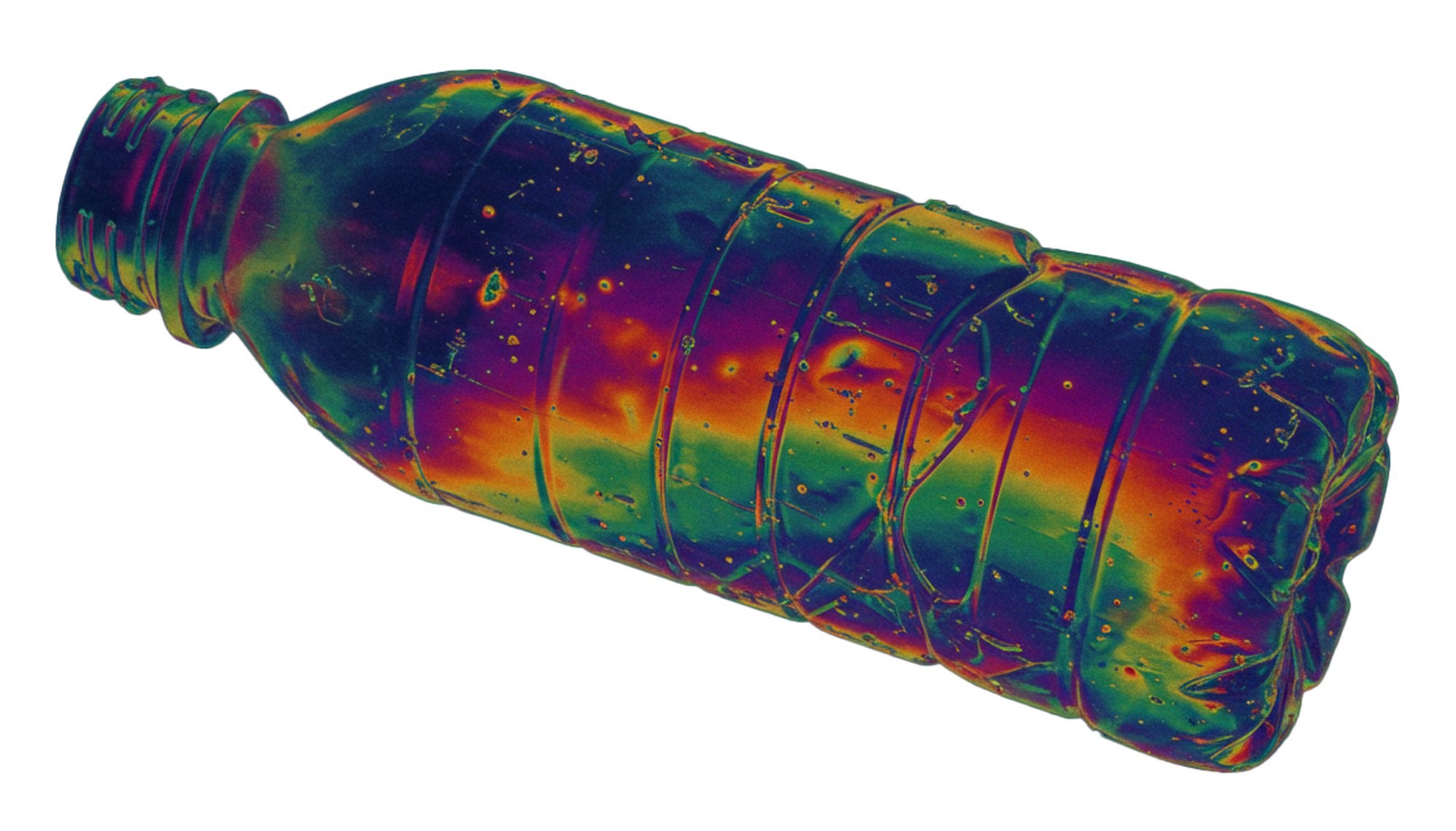
Type: PET / Shape: Bottle / Color: White / Recyclable: Yes
These overall limitations of existing sorting methods stagnate recycling rates and make it difficult to secure high-quality recycled content, blocking the transition to a circular economy.
Therefore, introducing AI sorting technology that comprehensively judges material, shape, color, etc., through deep learning-based image analysis and increases accuracy through continuous data learning is no longer an option but an essential task.
Topic 2. Optical Sorter vs. AI Robot Sorter: Comparative Analysis for the Optimal Combination
Role and Sorted Items
Installation Space and Accompanying Works
Operational Efficiency
'Optical Sorters' and 'AI Robot Sorters' are the most core automation technologies in the modernization of recycling sorting facilities. The two technologies are in a complementary relationship that can maximize the efficiency of the sorting process based on their respective roles and strengths. Therefore, it is necessary to clearly understand the characteristics of each technology and devise a strategy for the optimal combination matching the current status and goals of the facility.
Detailed Equipment Comparison: Optical Sorter vs AI Robot Sorter
Classification | Optical Sorter | AI Robot Sorter |
|---|---|---|
Core Role | Primary high-speed sorting of mass inputs | Secondary precise sorting of residues and recovery of valuable items |
Sorted Items | PET, PE, PP, PS, etc. | PET of specific colors, other plastics (Other), plastic film, hazardous materials, etc., multi-item small-quantity and special items |
Processing Method | Recognizes materials by shooting near-infrared (NIR) light at waste quickly passing through a conveyor belt, and separates them with an air jet | Recognizes waste with an AI vision camera and accurately picks and separates targets with a delta (parallel) robot |
Installation Space | Relatively large. Requires sufficient straight lines for high-speed belts and air jet spraying | Relatively small. Can replace part of existing manual sorting lines or be installed in narrow spaces. |
Accompanying Works | Essential. Accompanied by large-scale works such as building new or completely replacing high-speed conveyor lines, air compressors, and dust collection facilities | Can be minimized. Relatively simple as it can be installed on existing conveyor lines or applied with only partial modifications |
Operational Efficiency | Processing speed: Overwhelmingly fast (processes several tons per hour) Accuracy: High accuracy (90% or more) for a set single material Flexibility: When sorting material changes → requires partial reconfiguration | Processing speed: Relatively slow (40-80 pieces per minute) Accuracy: Very high accuracy (99% or more) can be realized through AI learning Flexibility: Easy to add new items via software updates → flexibility is very high |
Role and Sorted Items: Mass Processing vs Precise Sorting
Optical Sorter
It plays the role of primary filtering of pre-set major materials such as PET, PE, PP, while quickly passing mass mixed waste pouring into the input mouth. It is like catching schools of fish with a large net. This is a core pre-processing step that reduces the load on the overall sorting process. Thanks to high processing capacity, it can process several tons of waste per hour, making it essential for large-scale facilities.
AI Robot Sorter
It plays the role of precisely sorting small amounts of residues missed by optical sorters, or special items and high-value-added waste that are difficult to pick out with optical sorters. For example, it accurately picks out high-quality transparent PET bottles, beverage cans (aluminum), other plastics (Other), contaminated plastic films, and hazardous substances such as batteries left after passing through the optical sorter. This corresponds to the quality control and finishing step that increases final sorting quality and maximizes recycling value.
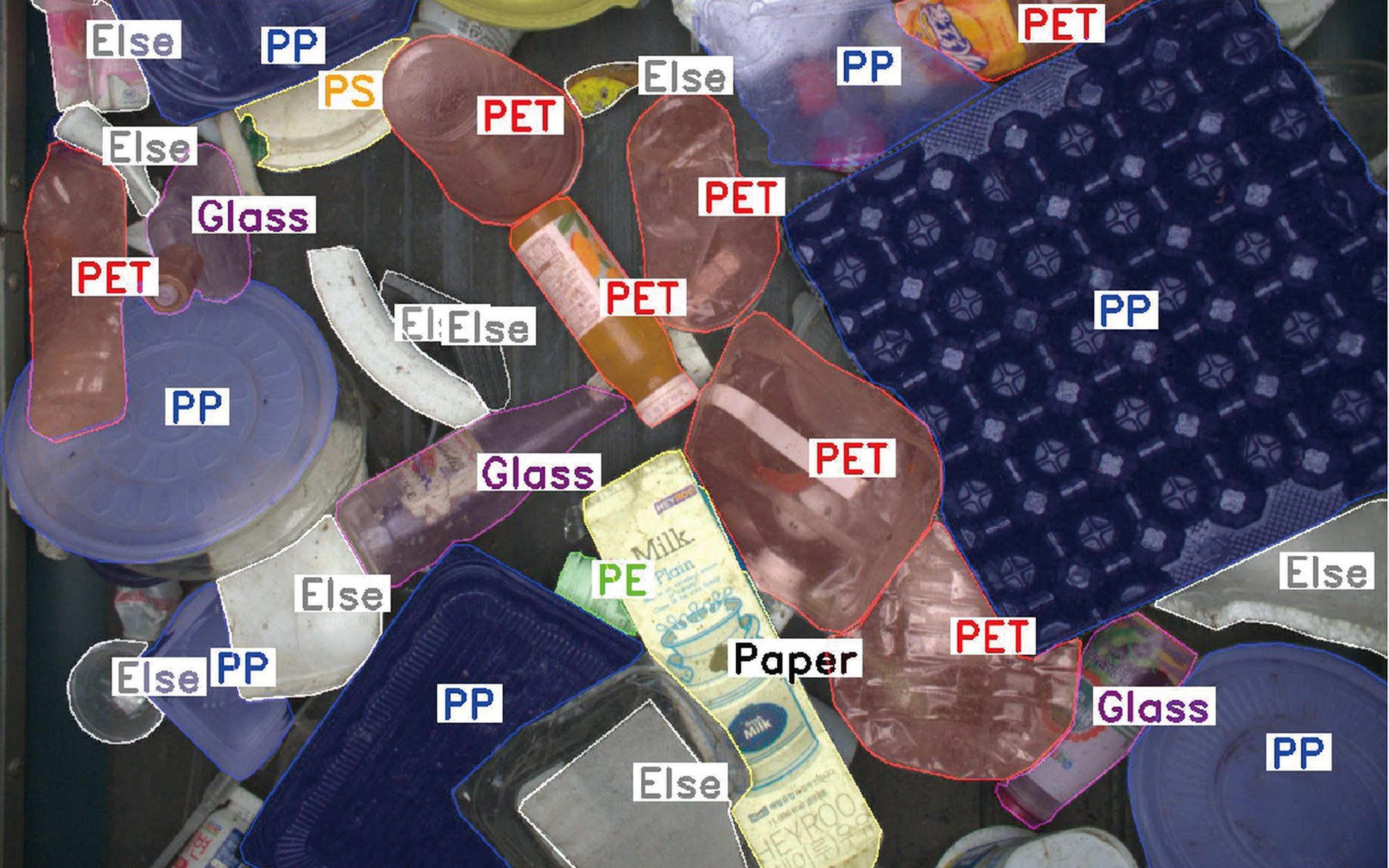
Atron's precise waste sorting monitoring
Installation Space and Accompanying Works: Large-scale Investment vs Flexible Application
Optical Sorter
It requires a considerably long straight line up to the space where the high-speed conveyor belt, sensor part, air jet spray part, and separated waste fall. In addition, large-scale accompanying works such as a high-capacity air compressor for driving powerful air jets and dust collection facilities to prevent dust generation are essential. For this reason, it is often adopted during new construction or full modernization rather than being additionally installed in existing facilities.
AI Robot Sorter
Since work takes place only within the operating radius of the robot, installation is possible even in relatively narrow spaces. It can minimize modifications by utilizing existing manual sorting conveyor lines as they are and installing robots above the space where workers used to stand. This is a big advantage that can reduce initial investment costs and construction periods.
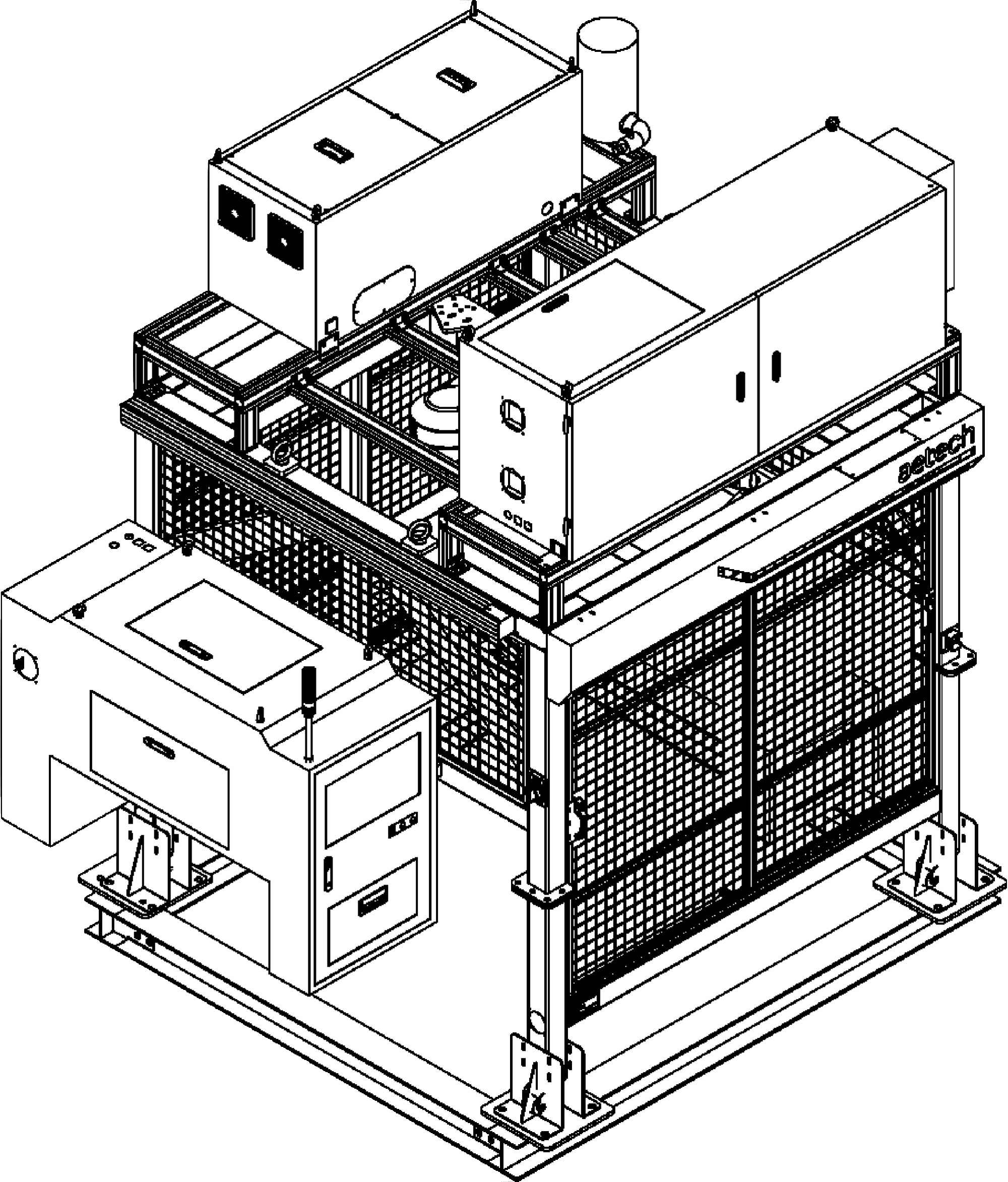
Atron, capable of creating synergy with previously installed sorting equipment in relatively narrow spaces
Operational Efficiency: Speed vs Accuracy and Flexibility
Optical Sorter
In terms of processing speed, it is overwhelming compared to AI robots. This is because it scans and classifies all waste passing through the conveyor belt in an instant. However, sorting is impossible for items other than pre-set specific materials, and errors may occur where sensors misidentify materials due to labels or contamination.
AI Robot Sorter
Because of the physical movement of the robotic arm, individual item processing speed is slower than that of optical sorters. However, it shows outstanding strengths in accuracy and flexibility. AI can judge targets with near 99% accuracy by comprehensively analyzing various visual information such as color, shape, logo, and barcode, in addition to material (NIR) information. In addition, when new items need to be sorted, sorting targets can be easily added or changed with just a software update without separate hardware replacement, making it very flexible in coping with changes.
In conclusion, optical sorters and AI robot sorters are technologies that complement each other. Once optical sorters quickly classify mass waste primary-wise to increase overall efficiency, AI robots deployed at the back end can precisely recover valuable items from residues to construct an 'optimal combination' that maximizes final recycling quality and profitability. This is the most realistic and effective sorting system modernization solution that solves labor shortages and safety issues, and meets strengthened recycling standards.

① Pre-processing via optical sorter: Quickly classifies mass waste primary-wise

② Post-processing via AI robot (Atron): Precisely recovers valuable items from residues
Topic 3. Strategy to Maximize Recycling Efficiency Through AI Robots
Incheon Songdo Resource Circulation Center → Adoption of 'AI Robot QC (Quality Control)' role and sorted items
The core of the AI sorting robot adoption strategy lies in 'complementation' rather than 'replacement'. Especially for facilities operating optical sorters, AI robots can be expected to have a synergy effect that elevates the 'value' of recycling to the next level by maximizing sorting efficiency and profitability with minimal investment.
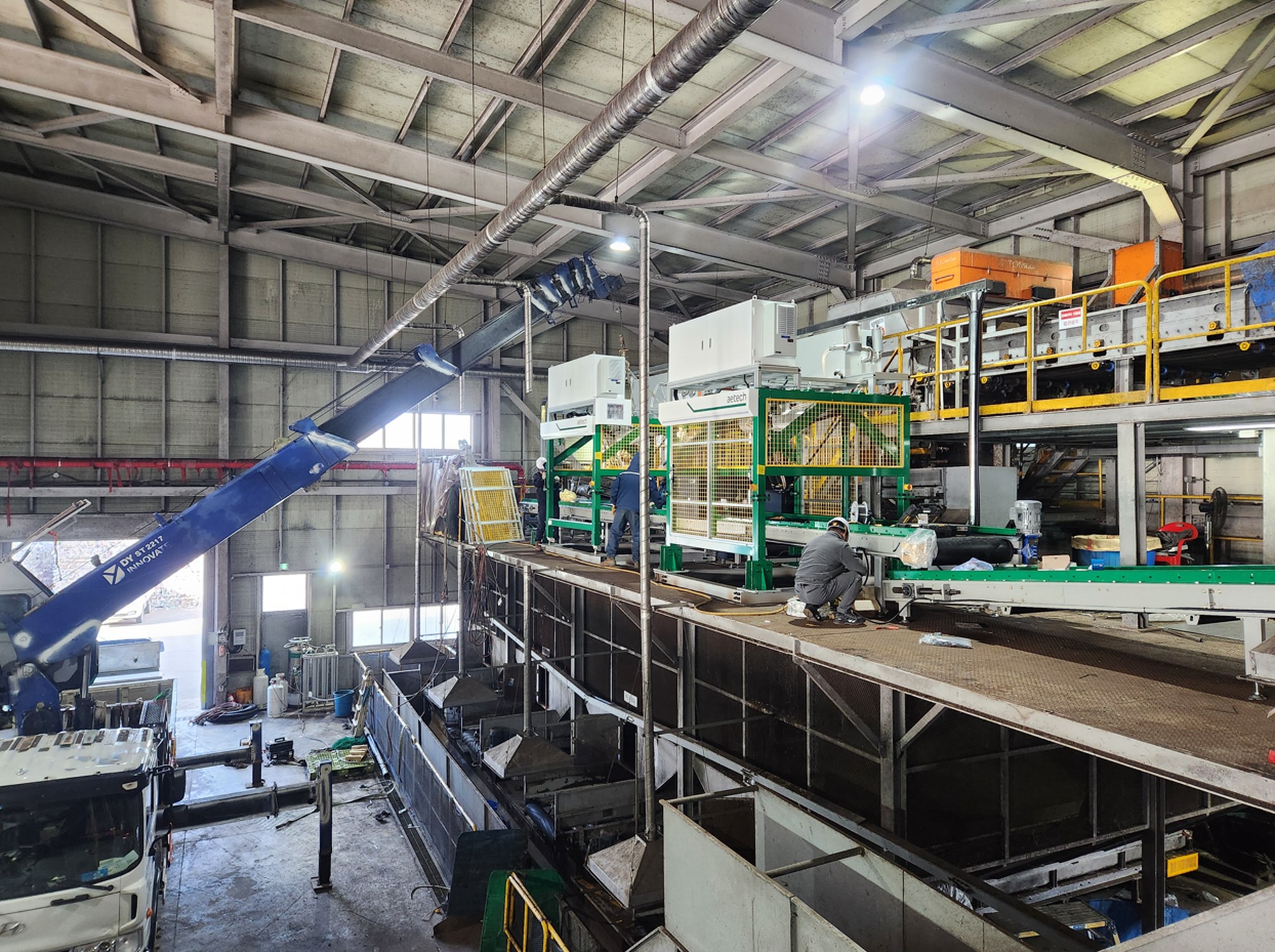
Installation of Atron (AI sorting robot) at the Incheon Songdo Resource Circulation Center
Valuables Missed by Optical Sorters
While optical sorters are excellent at sorting set main materials (PET, PE, etc.) in large quantities and quickly, they have limits in sorting valuable waste (valuables) that can generate additional revenue.
Recognition Errors
When labels are not completely removed, severe crushing exists, or items are contaminated with foreign matter, materials are misidentified, occasionally discharging valuable recyclable items as 'residues'.
Limits of Sorted Items
Optical sorters are mainly set to sort only specific broad material categories such as PET, PE, PP, so they miss most 'niche items' that are small in quantity but high in value, such as other plastics (OTHER), small home appliances, colored PET, and aluminum cans.
Absence of Final Quality Control
Since some foreign matter can be mixed even in primary-sorted items, additional quality inspection is required to sell them as high-quality recycled content.
Role of AI Robot - QC and Value Recovery
The Songdo Resource Circulation Center deployed AI robots in the back-end process, i.e., in the QC (Quality Control) role, precisely to recover these 'valuables missed by optical sorters' and improve final sorting quality. Above the conveyor belt containing residues that passed through the optical sorter, the AI robot performs the following roles.
Valuable Items Recovery
It accurately identifies and recovers aluminum cans, scrap metal, colored PET bottles, etc., that make money from residues.
Foreign Matter Removal
It improves the purity of final products by removing non-recyclable waste or hazardous substances.
Alleviation of Manual Sorting Labor Intensity
Previously, humans had to check final residues and pick out valuables, but as AI robots replaced this, worker safety and the working environment improved significantly.
Actual Operation of AI Robot
STEP 01
First, waste passing over the conveyor belt is analyzed in real time with the vision camera on top.
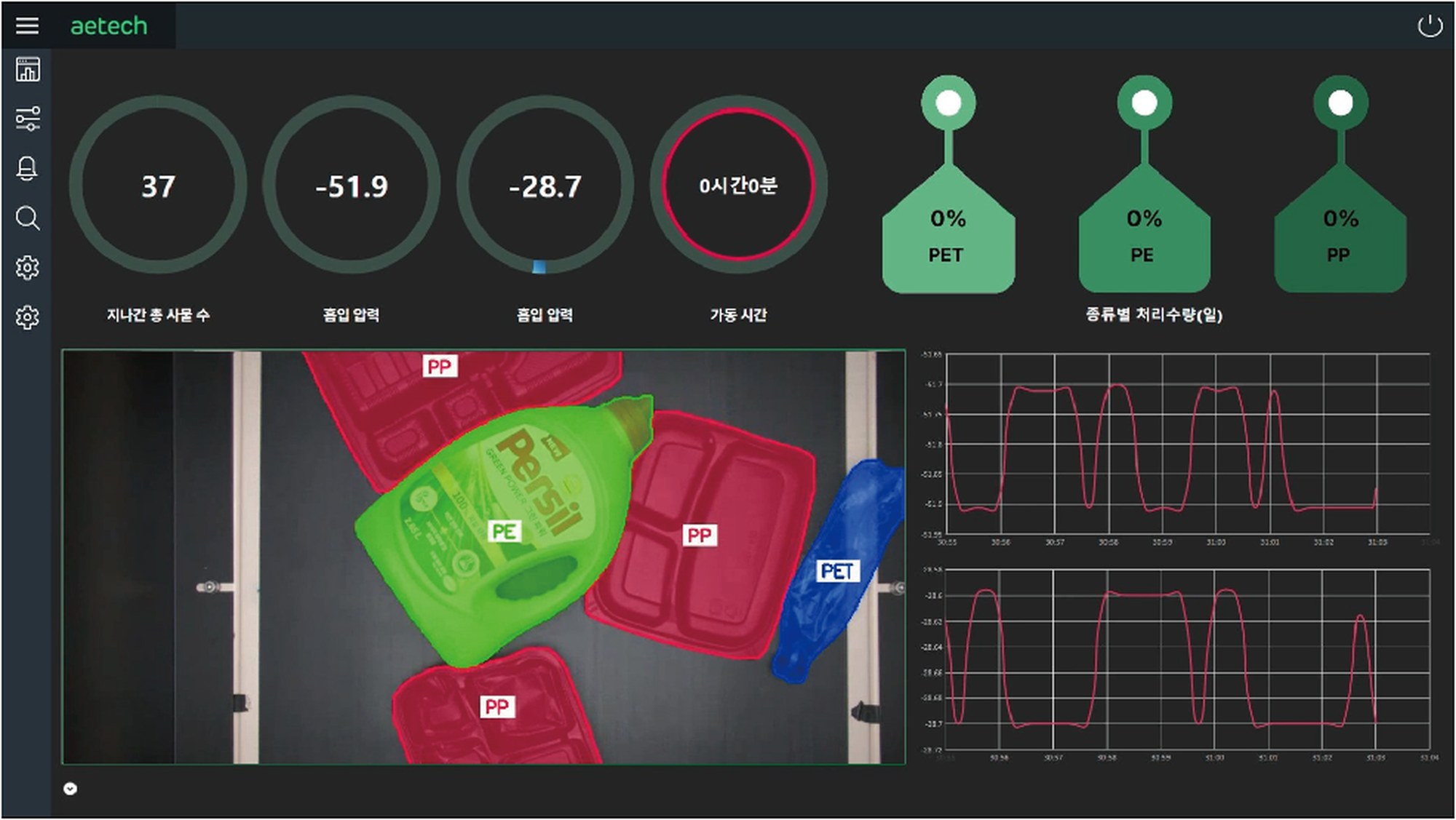
STEP 02
Thereafter, once the AI recognizes the target based on pre-learned data (material, color, shape, etc.), the robotic arm accurately picks the item in an instant and moves it to the designated storage.

Role of AI Robot - QC and Value Recovery
Through collaboration between AI robots and optical sorters, the most efficient automated process is completed: 'primary mass sorting (optical sorter) → secondary precise sorting and value recovery (AI robot)'. This is a smart strategy that maximizes overall productivity and profitability with minimal additional investment, and is the optimal solution that can resolve challenges faced by both public and private sectors.
Optical Sorter + AI Robot
Optical Sorter → Primary Mass Sorting
AI Robot → Secondary Precise Sorting and Value Recovery
Economic Value Increase
Additional Revenue Generation
Processing Cost Reduction
Improved Quality of Sorted Products and Unit Price Rise
Operational Efficiency and Stability Improvement
Resolving Labor Shortage and Securing Safety
Maintaining Productivity Consistency
Protecting Existing Facility Investments
Policy Compliance and ESG Strengthening
Meeting Strengthened Recycling Obligations (Public)
Realizing ESG Management (Private)
Chapter 03. Actual Adoption Cases Analysis
Topic. Case Analysis_Ulsan Daeyoung Enterprise
3 Dilemmas of Daeyoung Enterprise
Daeyoung Enterprise's Choice and Improvement Effects
Insight: Cost Structure Change Against Processing Volume Increase
Practical Value That Private Enterprises Can Gain
'Daeyoung Enterprise', a representative private recycling company in Ulsan, was placed in a fierce competitive situation where it had to simultaneously create maximum efficiency and revenue within limited resources.
And Daeyoung Enterprise decided to adopt AI robots to break through this situation, and the amazing changes obtained thereafter clearly show the direction recycling sorting facilities should take.
3 Dilemmas of Daeyoung Enterprise
The concerns of Daeyoung Enterprise can be broadly summarized into three. These are also realistic problems faced by the majority of private and public sorting plants.
First, Chronic Labor Shortages and Rising Labor Costs
Recycling waste sorting work is a representative 3D industry, and finding new workers is as difficult as 'plucking stars from the sky'. In addition, the aging of existing workforces is accelerating, gradually dropping productivity. To make matters worse, labor costs such as minimum wage increases continuously rose, becoming a core factor worsening profitability.
Second, Limits of Night/Extended Operations
Although waste kept coming in, they could not even dream of operating at night or on holidays due to labor problems. This dropped the utilization rate of the facility, and failed to process carried-in waste on time, acting as an obstacle to business expansion or additional contracts.
Third, Clear Limits of Manual Sorting
In the final residue processing line, humans had to directly sort valuables. However, due to fast conveyor speeds and accumulated worker fatigue, they showed low recovery rates, and a significant amount of valuable resources (cans, PET bottles, etc.) was being thrown away in residues while paying incineration/landfill costs. This caused double distress, missing opportunities to generate revenue and paying unnecessary costs.
Daeyoung Enterprise's Choice and Improvement Effects
Daeyoung Enterprise made a bold decision of 'strategic investment' to adopt AI sorting robots to solve the problems. It was a move toward fundamental restructuring beyond simple labor replacement, leading to innovative metric improvements.

Atron, the AI sorting robot adopted to Daeyoung Enterprise
Incineration/Landfill Cost Reduction
Before Adoption (Manual Dependency) | After Adoption (AI Robot Applied) |
|---|---|
A large volume of residues occurred where unrecovered valuables were mixed and went out | AI additionally sorts valuables from residues, reducing final residues by 20% or more |
Maximizing Profitability: AI robots recovered cans, PET, etc. mixed in residues with 90% or higher accuracy. This directly connected to additional revenue, and simultaneously reduced final waste processing volume, bringing the effect of saving millions of won monthly in incineration/landfill costs that were spent every month.
Achieving 100% Unmanned Rate
Before Adoption (Manual Dependency) | After Adoption (AI Robot Applied) |
|---|---|
Constant deployment of manual sorting workforces in core sorting processes → risk of safety accidents always present | Achieved 100% unmanned rate in the corresponding process → existing workforces transitioned to high-value-added work |
Simultaneous Achievement of Safety and Efficiency: As robots completely replaced the most dangerous and difficult residue sorting work, the risk of safety accidents in that process became '0'. Existing skilled workers were redeployed to higher value-adding tasks such as equipment management or high-quality sorted product inspections, maximizing labor operational efficiency.
Increased Facility Operating Hours
Before Adoption (Manual Dependency) | After Adoption (AI Robot Applied) |
|---|---|
5 days a week, 8 hours a day (40 hours a week) → night operation impossible due to labor dependency | 7 days a week, 16 hours a day (112 hours a week) → realized complete night unmanned sorting |
Production Volume Increased 2.8 Times: AI robots can operate 24 hours a day without fatigue. Daeyoung Enterprise utilized this to build Korea's first night unmanned sorting process. And through this, by additionally processing quantities that could not be processed during the day at night, the processing capacity of the entire facility was dramatically improved.

In conclusion, the case of Daeyoung Enterprise proves that AI robots go beyond simple automation equipment to be 'Game Changers' that improve the cost structure and maximize productivity of companies, while building safe working environments. It presents the clearest and most powerful answer to "Why should AI robots be adopted?" to all public and private sorting facilities harboring common concerns of labor shortages and worsening profitability.
Insight: Cost Structure Change Against Processing Volume Increase
The adoption of AI sorting robots fundamentally changes the growth potential and profitability of businesses.
Before Adoption — 'Labor Cost'-Centered Linear Cost Structure (Growth Limit)
Proportional Relationship Between Processing Volume and Cost
Manual-centered sorting plants are absolutely dominated by labor costs. To double the processing volume, double the labor is theoretically required. Because revenue and costs increase in direct proportion, it is easy to fall into the 'growth trap' where profit margins rarely improve even if sales increase.
Low Marginal Utilization Rate
Due to difficult labor supply and the 52-hour workweek, increasing processing volume through night or holiday operations is impossible. And fixed costs (rent, depreciation, etc.) occurring during times when facilities are stopped deepen the worsening of profitability.
Conclusion
In this structure, as the company grows, labor issues and cost burdens also increase together, making scaling up beyond a certain level impossible.
After Adoption — 'Fixed Cost'-Centered Leverage Cost Structure (Revenue Increase)
Maximizing Profit After Passing Break-Even Point (BEP)
Initial fixed cost investment can somewhat raise the break-even point. However, because labor cost increases are low even if processing volume increases, once the break-even point is crossed, most of the sales increase converts into profit. In addition, as time flows, the gap between sales and costs grows exponentially, causing an 'operating leverage effect'.
Utilizing 200% of Facility Operating Rate
Daeyoung Enterprise had existing workforces handle daytime, and built complete unmanned sorting processes with AI robots for nighttime, improving the facility operating rate by more than 2 times. This is the most efficient method to maximize production volume by extracting the maximum potential of existing facilities.
Conclusion
After introducing AI sorting robots, as more quantities are processed, average processing costs actually decrease and profit margins improve sharply, allowing securing an overwhelming advantage in market competition.
Practical Value That Private Enterprises Can Gain
The cost structure change due to AI adoption provides specific and practical values.
Production Volume Increase: Hidden Time Becomes Revenue
Ulsan Daeyoung Enterprise increased its operating hours, which were 40 hours a week, to 112 hours a week through the adoption of AI robots. This has the same effect as increasing production volume by 2.8 times without expanding facilities. It gained the capacity to generate additional revenue utilizing nighttime hours, process existing customers' quantities more smoothly, and sign new contracts.
Operational Stability: Predictable and Controllable Costs
Operating costs of AI robots (electricity fees, etc.) are almost constant depending on usage, making prediction and control very easy. This is a fundamental difference from labor costs, which have large unpredictable risks such as minimum wage increases, labor departures, and labor management. A stable cost structure becomes the foundation for establishing long-term business plans and maintaining stable profitability.
Market Competitiveness: Early Realization of 'Economies of Scale'
If identical quantities can be processed at lower average costs through AI robots, economies of scale can be realized early to secure an advantage in price competition. More aggressive raw material purchases and competitive unit prices of sorted products become possible, strengthening market dominance.

AI sorting robot 'Atron'
The adoption of AI robots by private sorting companies is a strategic investment that innovates corporate cost structures, breaks through growth limits, and builds sustainable profit models. The transition to a 'smart cost structure' that rewards with larger profits as processing volumes increase will be the most certain choice to secure corporate survival and growth amid uncertain market environments.
Chapter 04. Technology Starting from Problems, Technology Expanding Boundaries
Topic 1. Technology Starting from Problems
Demonstration Case 1: Eyes That Perfectly Pick Out Glass Bottles by Color
Demonstration Case 2: Small But Valuable, Rebirth of Coffee Capsules
Demonstration Case 3: Dilemma of Recycling, Sorting Out Aseptic Cartons and Paper Cartons
Demonstration Case 4: Resource Mining in Rough and Disorderly Construction Waste
The true value of AI sorting technology goes beyond simply replacing existing tasks, to challenging areas deemed 'impossible' until now and presenting solutions.
From glass bottles, coffee capsules, aseptic cartons, to even construction waste, which were the most troublesome headaches in recycling sites, AI technology is breaking down boundaries and opening up new possibilities for resource circulation.
Case 1. Eyes That Perfectly Pick Out Glass Bottles by Color

The Problem
Glass bottles can be recycled as high-quality raw materials only when separated by color (transparent, brown, green). However, existing manual sorting was slow, had low accuracy, and had a high risk of damage, seriously threatening worker safety. In particular, distinguishing glass fragments passing quickly over a conveyor belt by color was almost close to impossible.
The Solution
High-Resolution Color Distinction: AI cameras recognize fine color differences far more precisely than human eyes. Through this, transparent, brown, and green bottles can be distinguished with 99% or higher accuracy.
Collaboration with Robots: Once the AI identifies the color, the interlocked robotic arm accurately and safely picks the glass bottle without damage risk and moves it to the designated space. One recycling facility in Europe adopted AI robots to process 1.5 tons of mixed glass per hour, improving color purity to 95% or more.
Reference Case
Large overseas recycling facilities have already built and are operating glass bottle automatic sorting systems utilizing AI and robots. This system automatically classifies glass bottles by color from mixed waste streams, greatly improving the efficiency and economics of the recycling process.
Case 2. Small But Valuable, Rebirth of Coffee Capsules

The Problem
Coffee capsules are very small in size and are composite materials mixing aluminum, plastic, and coffee grounds, making them regarded as extremely difficult items to recycle. Most were incinerated or landfilled as they were, adding to the environmental burden.
The Solution
Small Object Recognition: AI's deep learning technology can accurately identify small and unique-shaped objects, like specific brands of coffee capsules, even amidst numerous waste items.
Valuable Resource Recovery: Companies such as Nespresso collaborated with recycling firms to adopt AI robots, building systems to separate collected capsules from other waste. Once AI robots sort the capsules, in subsequent processes, aluminum is recycled into new products, and coffee grounds are recycled into farm fertilizer or bioenergy raw materials. One utilization facility in France successfully sorts up to 80 coffee capsules per minute through AI robots.
Reference Case
Global coffee brands are actively introducing AI technology to improve the recycling rate of their capsules. This is evaluated as a significant case of brand sustainability and ESG management, moving beyond simple waste processing.
Case 3. Dilemma of Recycling, Sorting Out Aseptic Cartons and Paper Cartons

The Problem
General paper cartons (e.g., milk cartons) and aseptic cartons (e.g., soy milk cartons, juice cartons) look similar on the outside, but their recycling processes differ because the inside of aseptic cartons is a composite material coated with aluminum. If these two mix, high-quality recycled toilet paper or paper towels cannot be made. However, since distinguishing them with the naked eye is almost impossible, the reality was that they were discharged in a mixed state at most sorting plants.
The Solution
Multi-Sensor Fusion: AI sorters simultaneously utilize general cameras (visual information) and near-infrared sensors (material information). Through this, they comprehensively analyze the design printed on the surface, shape, and even the presence of internal aluminum coating to accurately distinguish general paper cartons from aseptic cartons.
Securing High-Quality Raw Materials: Multiple paper mills and recycling facilities in Korea and abroad have adopted AI sorters to effectively separate aseptic cartons from mixed paper carton streams. Through this, they contribute to stably securing high-quality recycled paper raw materials and lowering dependence on imported pulp.
Reference Case
The Ministry of Environment and local governments are making efforts to strengthen separate discharge and sorting of aseptic cartons, and AI sorting technology is drawing attention as the most promising alternative to realize this. Some local governments are already promoting the adoption of AI-based paper carton sorting systems in public sorting plants.
Case 4. Resource Mining in Rough and Disorderly Construction Waste

The Problem
Construction waste has been regarded as the most difficult field for automated sorting because various types of waste such as wood, concrete, metal, and plastic are mixed in disorderly, large, and heavy forms. Due to relying on dangerous and difficult manual labor, recycling rates were low, and most were processed through simple landfill/incineration.
The Solution
Combination of Powerful Robots and Precise AI: Once the AI vision system identifies the type of construction waste (wood, metal pieces, concrete lumps, etc.), a large robotic arm with strong durability and power picks the waste and separates it by type.
Maximizing Resource Recovery Rate: A waste management company in Finland adopted AI robots to construction waste sorting lines, pulling up recycling rates nearly twofold. In particular, they created new revenue and greatly reduced landfill costs by recovering high-quality wood, metals, etc. that were difficult for humans to directly sort, and selling them as recycled content.
Reference Case
As construction waste recycling obligations strengthen mainly centering on North America and Europe, the adoption of automated sorting systems combining AI and robots is rapidly spreading. This is recognized as a key technology that secures worker safety, reduces the burden on landfills, and expands the circular economy to the construction field.
Topic 2. Partnerships Securing Technical Flexibility
The Power to Do Everything Directly
Data That Gives Trust
Ability to Respond to Future Changes
Management Convenience Differing in Details
The recycling market is changing faster than ever before. Government policies, newly appearing packaging materials, and fluctuating raw material prices are all variables.
In this era of uncertainty, the technology recycling companies must choose should be a 'solution' and simultaneously a 'partner' that can cope flexibly with any future changes.
This is why 'technical flexibility' based on internalized core capabilities and transparent data is important.
The Power to Do Everything Directly: Internalized AI Development and HW Design Capabilities
Difference in Problem Solving Speed
Systems that merely assemble parts of different companies from the outside face complex cause identification when problems occur, and are bound to face delays due to intertwined responsibilities among multiple firms. On the other hand, Aetech, which has internalized everything from AI algorithms, vision systems, robot control, to hardware design, can immediately grasp the cause of problems and respond quickly. And this directly leads to the core competitiveness of minimizing downtime (Downtime) during which customer facilities are stopped.
Difference in Optimization and Performance
In-house technology makes perfect synergy between hardware and software possible. It custom-designs cameras and lighting systems to obtain optimal images that AI models can recognize best, and optimizes robot movements so that AI decisions can be executed fastest and most accurately. This leads to overwhelming sorting speed and accuracy that combinations of external parts can never catch up with.
Classification | Core Technology Internalized Company (Integrated) | External Technology Assembly Company (Combinational) |
|---|---|---|
Problem Solving | One-stop Service: Fast and responsible response possible through a single window | Passing Responsibility: Problem resolution delayed due to responsibility battles between H/W and S/W firms when issues occur |
Performance Optimization | H/W and S/W optimized for one goal → exerts best performance | Difficult to exert 100% of potential performance due to compatibility issues between different parts |
Upgrade | Continuous · Integrated Improvement: Performance continuously improves through simultaneous upgrade of AI models and H/W | Limited · Fragmented Improvement: Conflict concerns when replacing some parts, limits in overall performance improvement |
Data That Gives Trust: Presenting Average Performance Metrics and Deviation Ranges
Providing Realistic Expectations
Providing deviation ranges together, such as "PET bottle sorting rate average 91-95%", means you can expect at least 91% even under the worst conditions and provides specific and realistic information that average performance around 95% can be expected. This crucially helps customers accurately predict adoption effects and establish business plans.
Confidence Based on Data
Being able to present deviation ranges means possessing massive data accumulated while operating equipment in numerous fields and the analytical capability for it. This is an expression of technological confidence that stable performance can be maintained against any variables. In-house technology makes perfect synergy between hardware and software possible.
Item | Average Sorting Rate (Deviation Range Included) | Performance Influencing Factors |
|---|---|---|
Transparent PET | 95% (92% ~ 98%) | Deviations occur depending on label attachment and degree of crushing |
Aluminum Cans | 94% (91% ~ 96%) | Some deviations exist depending on foreign matter contamination and size |
HDPE (Detergent Bottles) | 92% (89% ~ 95%) | Influenced by mixing ratio with similar material (PP) |
Ability to Respond to Future Changes
The core of technical flexibility is 'future responsiveness'. Moving beyond sorting items needed right now, technical flexibility to cope flexibly with changes and regulations expected in the future must be considered.

Fast and Flexible Upgrades
Internalized AI capabilities allow responding immediately to market changes. For example, when the government changes policies to sort 'transparent brown PET bottles' separately, or when specific composite material packaging becomes a new high-value-added item due to technology development, new items can be learned and sorted simply by updating AI software remotely without separate hardware replacement. This makes current customers' investments in AI robots 'future-proof investments'.
And this is a differentiated value that can only be provided by a 'technology partner' that grows together with the customer's business, constantly providing new values, rather than a simple equipment supplier.
Management Convenience Differing in Details
The last puzzle completing technical flexibility: frequent stops and complex maintenance increase the burden on field workers. True technical flexibility must include maintenance convenience that can be easily managed along with powerful sorting capability to be complete.
Problem Situation: "Please wipe the robot's hands!"
The most frequent problem occurring when operating robots in recycling sorting fields is the contamination of end-effector suction pads. Sugars, grease, and fine dust remaining in beverage bottles attach to suction pads, dropping suction power. This causes failures where targets are not properly picked and are dropped, directly leading to sorting rate declines.
Existing Resolution Method
To solve this problem, field workers had to periodically stop robot operations and directly wipe suction pads. This gave rise to the following inefficiencies.
Frequent Downtime — Accumulated time where robots stop for cleaning → overall process productivity decline
Deployment of Additional Labor — Dedicated staff kept on standby for robot care, or pulled away from other tasks
Inconsistency of Performance — Robot performance depends on worker management levels → inconsistent results outputted
Differentiated Solution: Self-Managing End-Effector
To solve these field grievances, companies with internalized technology capabilities set 'maintenance convenience' as a core goal starting from the design stage of the end-effector.
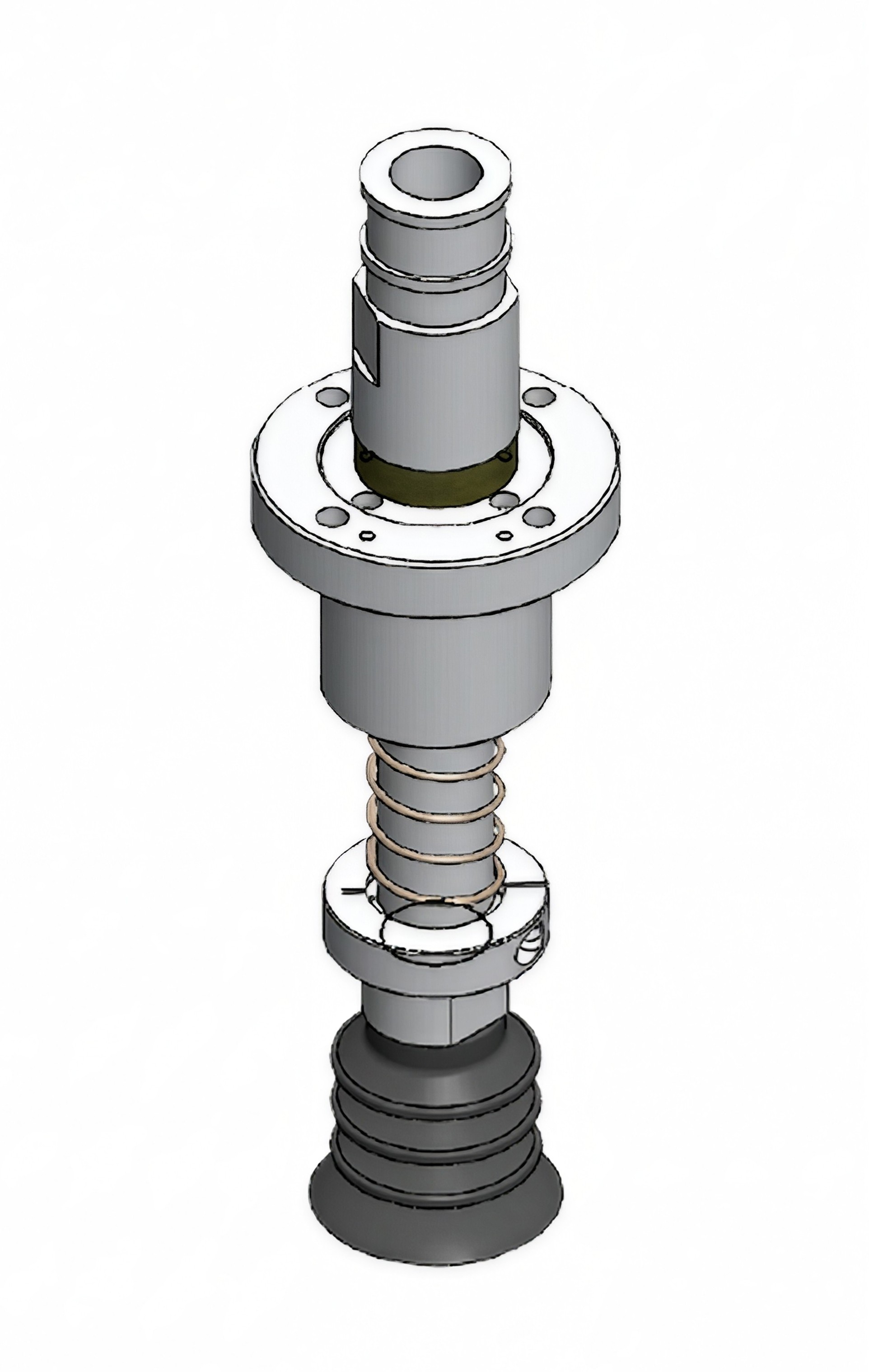
Atron's smart management end-effector
One-Touch Modular Replacement Design
Core consumables such as suction pads are designed in modular forms, allowing easy disassembly and assembly with bare hands without special tools. Just like replacing printer ink cartridges, any field worker can handle it quickly without expert help.
Automatic Cleaning (Air-Purge) Structure
Every moment the robot puts down a sorted product, it momentarily sprays compressed air to shake off foreign matter on suction pad surfaces by itself. And this efficiently prevents downtime occurrences where suction power drops, dropping accuracy and stopping machines.
Maintenance Convenience Improvement Effects
Classification | General End-Effector | Self-Developed End-Effector (Maintenance Enhanced) | Expected Effect |
|---|---|---|---|
Cleaning Interval | Every 2-4 hours (frequent suction decline) | Every 8-12 hours or more (auto foreign matter removal function) | Downtime reduced by 60% or more ↓ → guarantees stable continuous operation |
Cleaning Method | Workers must directly enter lines and wipe | Robot cleans itself, wiped briefly from outside if necessary | Secures worker safety and drastically reduces labor intensity |
Cleaning Time Spent | 10-15 minutes per time (line halt required) | Within 5 minutes per time (simple measure) | Minimizes productivity loss and maximizes operational efficiency |
Core Parts Replacement | Expert required, takes 30 minutes or more, tools essential | Direct replacement by worker, completed within 5 minutes, tools unnecessary | Quick field action possible, reduces maintenance costs |
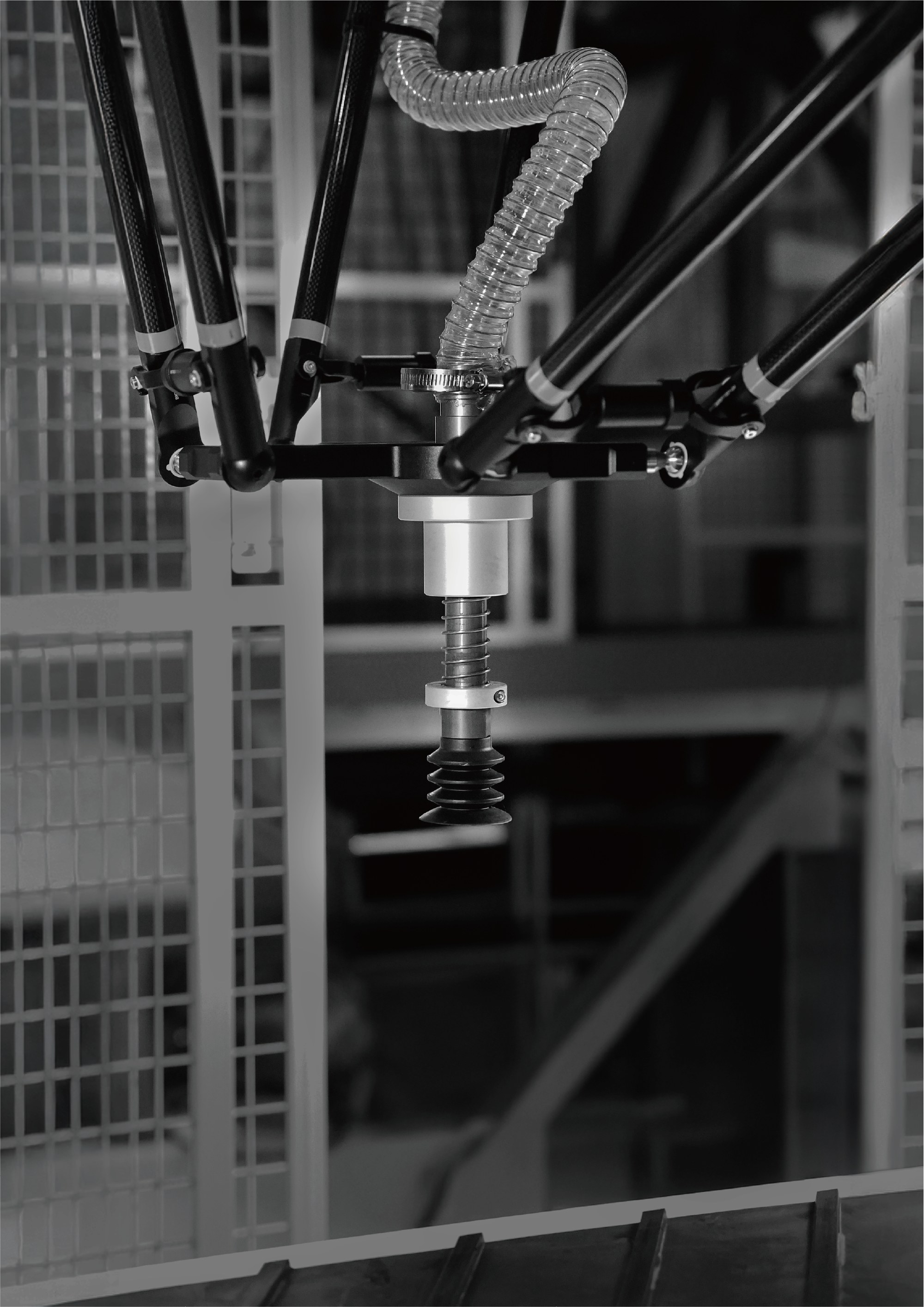
In conclusion, the technology customers should choose is one that can maintain best performance 'for the longest time, most easily'. The maintenance convenience of precisely designed end-effectors can maximize robot operating rates and save additional operating costs. And through this, it becomes a 'small but powerful competitive edge' so that customers' investments can create sustainable values.
Report Final Summary
Waste sorting plants are currently standing at a crossroads of "obsolescence or leap". Under strengthening global regulations and intensifying market competition, facilities staying with existing methods will soon face crises of financial loss, operational instability, and loss of market competitiveness.
However, the answer is clear. AI-based sorting technology is not just equipment, but a strategic investment for survival and growth. When AI recovers valuables missed by optical sorters, replaces manual labor limits with unmanned operation, and builds automated processes that do not stop even at night, sorting plants can immediately realize maximized profitability, secured operational stability, and strengthened ESG competitiveness.
Actual cases in Songdo and Ulsan prove this. AI is no longer an "experimental new technology", but is already creating concrete results in fields such as cost reduction and sales growth. Now, there is only one thing sorting plants must choose: transition to a future-type sorting plant together with AI. There is no reason to delay action.
Leading The Future of Circularity
Report Title: Responding to Changing Recycling Policies with AI Sorting Technology
Written by: Aetech, Co.,Ltd
© 2026, Aetech. All rights reserved.
Explore More
Check out the resources created by Aetech.

