


Reduction in screening costs
Increase working hours
Increase sorting speed
AI
Role: Deep learning-based material analysis recognition and learning, control algorithm development technology
Artificial intelligence that judges and issues commands in the behavioral area after judging the information of the recognition process, moves the robot arm along the estimated path of object recognition through a vision sensor, and ultimately moves the object to the desired destination.
AI judging function for controlling robots (object shape recognition, determination of recyclable materials, recognition and judgment of materials, etc.)
HW design
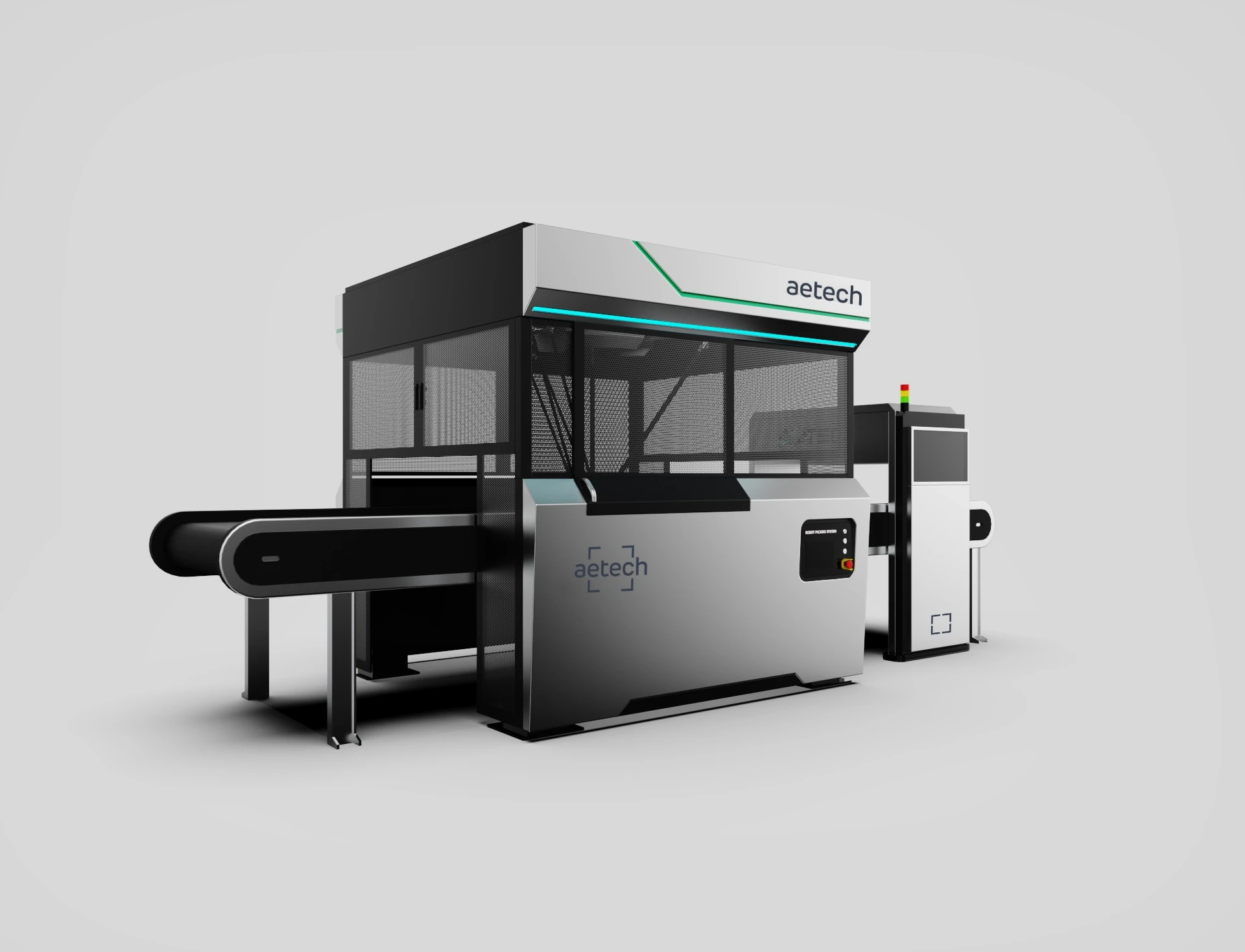
Design and manufacture of frames for installing Vision optics and Robots.
Optimizing the success rate of waste Pick&Place, and developing a Robot EndEffector.
Development of high-speed air direction switching device. Progress of auxiliary facility construction and electrical work for equipment installation.

Robot control
Role: 3-axis manipulator
Performing the role of a robotic arm executing commands in the judgment area, picking up identified recyclable waste at the appropriate pressure, and ultimately sorting it to the destination.
Classifying up to 96 items per minute, it allows for extended periods of driving at twice the speed of a person
Record
Role: Data collection and statistics of the amount of input, classification by recyclable items, and final disposal amount.
Real-time classification monitoring → Daily processing volume, status management of robotics, consumables, exchange cycle, etc. can be checked
Online remote service -> Quickly resolve on-site issues
Understanding power consumption such as daily and monthly → Suggesting efficient business facility management for customers


[FAQ] Atron
Introduction
What is Atron?
Atron is an AI-powered waste sorting robot developed by Aetech. It uses AI vision to identify the material and color of waste on a conveyor belt and sorts them using a 3-axis manipulator, sorting up to 96 items per minute with an object recognition accuracy of 99.3%. It classifies more than 52 types of waste across 9 categories, including PET, PP, and PE. As of August 20, 2026, 31 units are in operation at 13 locations nationwide.
Sorting facility on-site tasks
Can AI sorting robots solve the labor shortage and aging workforce in recycling facilities?
AI sorting robots like Atron can replace sorting processes where it is difficult to find workers, helping to alleviate labor shortages in recycling sorting plants. Recycling sorting plants are considered an avoided industry due to odors, dust, and simple, repetitive physical labor, leading to low influx of new personnel. According to a 2024 survey of 77 municipal waste sorting facility workers nationwide by the Korea Women's Environmental Network, 85.7% of respondents were in their 50s or older, with an average age of 55.2 years. At one sorting plant verified on-site by Aetech, the average age of the sorting staff was in the late 70s. In the sorting plant in the Incheon area where Atron was first introduced, two personnel who had been assigned to the PET bottle sorting process were moved to other tasks, and during the same period, daily production increased from 15 compressed PET blocks to 16.
Do AI sorting robots help when sorting staff leave during summer and winter?
Because Atron sorts at the same speed regardless of human working conditions, it is less affected by the issue of seasonal labor shortages. Sorting work has high seasonal labor fluctuations, so during persistent heat waves, the number of working staff decreases significantly, repeatedly leading to situations where the same volume must be processed with fewer people. Atron sorts up to 96 items per minute.
Can AI sorting robots reduce safety accidents in recycling sorting facilities?
When AI sorting robots like Atron take over the sorting, the section where workers directly touch waste is reduced, thereby reducing the risk of injury. In a 2024 survey of 77 sorting workers conducted by the Women's Environmental Network, all respondents had experienced being pricked or cut during work, with glass fragments (44.2%) cited as the most common cause. Atron also grips and sorts glass bottles. According to the Ministry of Employment and Labor, the number of accidental deaths at waste treatment facilities, including recycling centers, averaged 19 per year from 2017 to 2020 and rose to 28 in 2021, leading to a fatal accident risk warning being issued for the waste treatment industry in December of that same year.
Public Procurement
Is Atron an innovative product of the Public Procurement Service?
Atron was designated as an innovative product by the Public Procurement Service in April 2024 (No. 2024-017, until April 2027). In 2025, the ATR-E-2in1 standard was additionally designated. It has also completed the industrial robot KCs self-safety confirmation declaration.
Can I check the cases of public sorting facilities where Atron has been introduced?
Atron has spread centered around public sorting facilities since it was designated as an innovative procurement product in April 2024. As of August 20, 2026, 18 units are operating in 9 public sorting facilities, including 2 in Yeonsu-gu, Incheon (Songdo), 2 in Songpa-gu, Seoul, 3 in Seongnam-si, Gyeonggi, 2 in Gapyeong-gun, Gyeonggi, 3 in Cheongdo-gun, Gyeongbuk, 2 in Ulleung-gun, Gyeongbuk, 1 in Namwon-si, Jeonbuk, 2 in Jeju-si, Jeju, and 1 in Seogwipo-si, Jeju. Including private sorting facilities, 31 units are operating in 13 locations nationwide.
Can we first introduce Atron through a demonstration support project or a testbed?
You can first introduce Atron through demonstration support projects or testbeds. Through the Seoul Metropolitan Government's testbed demonstration support project, we collaborated with the Seoul Resource Circulation Division to install Atron at the Songpa-gu Resource Circulation Sorting Facility. This method allows the performance to be verified through demonstration before leading to an official purchase.
Are there any cases where Atron was introduced through the robot demonstration support project?
Through the service robot demonstration support project of the Korea Institute for Robot Industry Advancement, several Atrons have been installed in local governments and private sorting facilities.
After introducing Atron, do we get data that can be used for reporting resource circulation performance?
Atron records operational history, sorting performance, and power consumption as a system of record. Together with real-time monitoring, cumulative data can be checked, making it useful for operational management and performance reporting.
Introduction & Cost
When and where was Atron Unit 1 installed?
Atron Unit 1 was installed in April 2022 at a recycling sorting facility in Namdong-gu, Incheon. Since then, four more units have been added to the same workplace, bringing the total to five in operation. Following its designation as an innovative product by the Public Procurement Service in April 2024 (No. 2024-017), it has spread mainly across public sorting facilities. In 2025, the ATR-E-2in1 standard was additionally designated as an innovative product. As of August 20, 2026, 31 units are in operation at public and private sorting sites in 13 locations nationwide.
How many sorting personnel does one Atron replace?
At the sorting facility in the Incheon area where it was first introduced, as one Atron was deployed, two personnel who had been assigned to the PET bottle sorting process were moved to other duties. Atron sorts up to 96 items per minute, which is about 2.4 times faster than manual sorting (approximately 40 items per minute, based on Aetech's on-site measurement). The actual reduction in workforce varies depending on the current staffing configuration and line layout, so it will be calculated and provided after an on-site inspection.
Are there any cases where the effects before and after introducing Atron have been verified with actual data?
In the case of the Incheon sorting facility, before introduction, they produced 15 compressed PETs, the final product, per day, but this increased to 16 after the first Atron unit was installed. During the same period, two people were removed from the PET bottle sorting process. In other words, the workforce was reduced while production increased. Since Atron keeps operating history, sorting performance, and power consumption through a recording system, the changes after introduction can be verified with data.
After installing Atron, what are the free after-sales service period and the software usage fee?
Atron provides free A/S for one year after installation, and no software usage fees are charged during this period. Afterwards, it will be billed as a maintenance item. Atron provides both real-time monitoring and remote services through a recording system.
Products & Technologies
How does Atron pick up waste?
When the AI vision of Atron identifies the material and color of waste on the conveyor, the 3-axis manipulator moves to that position and picks up the waste by directly gripping it with an end effector through a vacuum. The vacuum is generated by a blower method, and the valve that switches between suction and destruction is controlled by a motor, switching in about 0.3 seconds.
Can Atron also pick up crushed plastic or glass bottles?
Atron can also grip crushed PET bottles or glass bottles. Since the vacuum suction method requires a flat and smooth suction surface, it is easy to drop crushed bottles, cylindrical objects, or heavy glass bottles. If the compression or crushing is severe, vacuum leaks out, making gripping difficult, and heavy objects like glass bottles are often excluded from sorting altogether. Atron secures a larger flow rate than existing pneumatic methods using a blower method, and its end-effector grips directly, allowing it to handle these irregular and heavy wastes.
Can Atron sort both compacted and non-compacted waste?
Atron sorts both compacted and non-compacted waste. While equipment developed overseas is often designed on the assumption of flattened, compacted waste, domestic recycling sorting facilities receive non-compacted waste piled up in a bulky state. Atron was developed based on this non-compacted environment, so it operates in both compacted and non-compacted conditions.
What type of end-effector (robot hand) does Atron use?
Atron's end effector is designed with a structure that absorbs Z-axis changes to accommodate objects of different heights. The method of contacting the surface with a rubber suction pad reduces the success rate if it slips or is pressed when coming into contact with the object, but Atron is configured to avoid this problem. Therefore, it can grip even lying PET bottles or tall cans.
Does the performance of Atron vary depending on the condition of the incoming waste?
The sorting performance of Atron varies depending on the condition of the incoming waste. Even with the same robot, the results change depending on the composition and contamination level of the incoming waste, the degree of overlap, conveyor speed, and load. Therefore, Aetech checks the incoming conditions through an on-site inspection before introduction, and customizes the optical system, frame, end effector, and air redirection device to suit that specific site.
How does Atron perform quality inspections before shipment?
Atron is shipped after assembly in our own factory and subsequent aging tests. The robot is mounted on a docking frame to undergo endless repetitive operation tests for about a week, and is packaged after completing hole, move, and section teaching, overall thermal recovery, and painting inspection. Outsourced parts undergo inspection prior to delivery.
Comparison
How does Atron compare to overseas AI sorting robots?
The biggest difference between Atron and overseas AI sorting robots is which waste they were designed for. Overseas equipment is often developed based on relatively well-separated and flat-compressed waste, so it is suitable for classifying compressed waste, but the success rate drops in environments with large volumes and heavy overlapping. Atron was developed based on the uncompressed domestic sorting site environment, and the vacuum generation method, gripping method, and parts procurement structure are also different. In addition, for overseas products, parts must be imported, so if a breakdown occurs, the line stops for as short as three days or as long as several months, and there were cases where post-management and performance guarantees were not continued after sales.
How is domestic waste different from overseas waste, and why is Atron more suitable for waste in the Asian region?
Compared to North America and Europe, where overseas equipment was mainly developed, waste in Asia, including Korea, is highly mixed, overlapping, and heavily contaminated. This is because sorting standards vary depending on each country's disposal habits, recycling policies, and collection methods, and the condition of the waste entering the sorting facility varies accordingly. Atron is trained and designed based on these conditions, making it advantageous for performance in sites with similar conditions.
Algebraic Calculation
How many Atron units are needed to completely automate the sorting facility?
The number of Atron units required to fully automate a sorting facility varies depending on the scale of the business site. If a sorting line with 30 workers is to be fully automated, a cumulative total of 8 to 10 units is needed, and if it is to replace all human labor at a large-scale business site with over 100 sorting workers, dozens of units will be required. However, the answer varies depending on whether the current sorting line is maintained as it is, whether an additional line is introduced, or whether a separate section is placed at the end.
Is the number of installed Atron units also limited because of the sorting line length?
The number of Atron installations may be limited due to the length of the sorting line. Even in a facility with multiple lines, if there is a limit on the total length of each line, the number of units that can be deployed is determined first. In fact, there was a case in a facility with five lines where a maximum of only 4 units could be deployed due to the line length. Therefore, the calculation of the number of units proceeds in the order of checking space constraints first rather than throughput.
What do I need to measure to estimate the number of Atron units to install?
To calculate the number of Atron units to install, check the speed and transport volume of the conveyor belt, the total length and clearance of the line, the daily target throughput, the processing capacity of the preceding and succeeding equipment, as well as the building structure, load, and floor height. After measuring these items during an on-site inspection, the layout plan and the number of units are calculated.
Can I increase Atron step by step instead of adding it all at once?
Atron can be introduced in phases rather than all at once. In fact, there is a case where Unit 1 was introduced and operated first, and then Units 2 and 3 were added to the same workplace. Deciding on expansion after collecting on-site data through the initial introduction and looking at the results carries less of a burden.
Data & AI
What data was Atron's AI trained on?
Atron's AI classification engine, wai-kor, has learned from over 5.5 million Korean waste data entries. Aetech does not outsource data collection and processing, but performs it directly. This is because data received from outside is of poor quality and does not lead to on-site accuracy.
Can we use our sorting facility data to further train Atron?
Atron can be additionally trained with on-site sorting facility data. Because it was designed on the premise that discharge methods and waste characteristics differ by country and region, additional training on on-site data expands it into a classification algorithm tailored to that specific site. By applying segmentation technology that recognizes objects at the pixel level and automatic labeling, the time required to train the same data has been cut by more than half.
Does Atron's accuracy continue to increase as the amount of training data increases?
The recognition accuracy of Atron increases up to a certain level as the training data increases, but after that, no noticeable improvement is observed. This is because the relationship between the amount of learning and recognition accuracy draws an upward curve and then flattens out, and unlike roads where the sorting environment changes every time, the sorting facility maintains a constant environment within the factory. Therefore, instead of adding more data, we focus on setting learning conditions suitable for the site and increasing accuracy through algorithms.
What tasks are required for Atron's on-site customized learning?
Atron's field-customized learning proceeds in the order of collecting data with waste brought into the site, processing and labeling it, learning it, and then verifying the recognition results. The results depend on what kind of learning environment to create, how many times to perform data augmentation and repetitive learning, and how to improve recognition accuracy for each item. The learning conditions and data quality are more important than the amount of data.
Is public sorting facility data also used for Atron training?
Aetech has a history of securing public sorting facility data by participating as a demanding enterprise in the public waste data collection project conducted with the Korea Environment Corporation in 2022. However, since the data directly collected and processed has higher quality than the data received from the outside, we focus on learning based on our own collected data.
Overseas
Can Atron be installed in overseas sorting facilities? Is local data required?
Atron can also be installed in overseas sorting facilities. Atron's AI classification engine is designed on the premise that discharge methods and waste characteristics differ by country and region, so if local data is additionally trained, it can be expanded into a classification algorithm suitable for the corresponding region. For this, local waste data is required, and collecting it in advance can significantly reduce the time it takes to secure performance after installation. The robot hardware is also customized to meet site conditions.